

The Silent Shift in the Cosmos
In the grand tapestry of the universe, galaxies are among the most dynamic and awe-inspiring structures we know. For billions of years, they shine with the light of newly born stars, growing and evolving in shapes as diverse as spirals, ellipticals, and irregular clouds. Yet, despite their apparent permanence in the night sky, galaxies are not immortal in their creative power. Many of them experience a dramatic transition known as “quenching” — a process in which they suddenly, or gradually, stop forming new stars.
This quiet shutdown transforms vibrant, star-forming galaxies into “dead” or “passive” systems composed mainly of aging stars. Understanding why this happens has become one of the most important questions in modern astrophysics. Quenching is not just a minor footnote in cosmic history; it is a central mechanism shaping the life cycle of galaxies and, ultimately, the structure of the universe itself.

What Does It Mean for a Galaxy to Stop Forming Stars?
A star-forming galaxy is rich in cold gas, primarily hydrogen, which collapses under gravity to form new stars. This process is continuous and can persist for billions of years as long as gas is available and conditions are right. When a galaxy becomes “quenched,” it loses the ability to form new stars. Without the birth of massive, luminous stars, its brightness fades over time as existing stars age and die.
Quenched galaxies tend to appear redder because young, hot, blue stars are no longer present. They are often ellipticals or lenticular galaxies rather than spirals, and they contain little to no cold gas. Although they may still be massive and impressive in size, their era of creativity has come to an end.
Quenching can occur rapidly in cosmic terms, in a matter of hundreds of millions of years, or it can unfold slowly over billions of years. The speed and mechanism depend on multiple factors, both internal to the galaxy and influenced by its external environment.
The Role of Gas: Star Formation’s Essential Ingredient
At the heart of quenching lies the fate of a galaxy’s gas. Cold, dense gas is the fuel for star formation. If this supply is removed, heated, or prevented from entering the galaxy in the first place, the formation of new stars will cease.
Some galaxies exhaust their gas by forming stars too efficiently. This process is known as “strangulation” or “starvation.” The galaxy simply uses up its available fuel and cannot replenish it. Over time, star production slows down and eventually stops as the last reserves of gas are consumed.
In other cases, the gas is still present but becomes too hot to collapse into new stars. When gas is heated to extremely high temperatures, it remains spread out and diffuse, unable to form the dense clouds needed for star birth. This often results from powerful processes occurring within the galaxy, such as supernova explosions or the activity of supermassive black holes.
Supermassive Black Holes: Galactic Saboteurs
Nearly every large galaxy contains a supermassive black hole at its center. Under the right conditions, these black holes can become active, swallowing vast amounts of matter and releasing enormous energy in the process. This phase, called an active galactic nucleus (AGN), can have devastating consequences for star formation.
As material spirals into the black hole, it heats up and emits intense radiation and powerful jets of particles. These jets can shoot out of the galaxy and push surrounding gas away. In some cases, they heat the gas so thoroughly that it cannot cool down to form stars. In others, they physically eject the gas from the galaxy altogether.
This black hole “feedback” is one of the leading explanations for sudden quenching in large, massive galaxies. The very object that grows as the galaxy evolves ultimately contributes to its shutdown, creating a self-regulating system on a cosmic scale.
What makes this phenomenon even more astonishing is the scale of influence. The black hole itself may be smaller than our solar system, yet it can affect a region tens or hundreds of thousands of light-years across.
Environmental Effects: When Galaxies Lose Their Freedom
Not all quenching is caused from within. A galaxy’s surroundings play a powerful role in determining its fate. Many galaxies exist in clusters containing hundreds or even thousands of other galaxies, all bound together by gravity. These clusters are filled with superheated gas known as the intracluster medium.
As a galaxy travels through this hot, dense medium, it experiences a force called ram pressure. This pressure can strip gas out of the galaxy, much like wind pushing leaves off a tree. Over time, the galaxy is robbed of its star-forming material and slips into quiescence.
Additionally, gravitational interactions with nearby galaxies can distort a galaxy’s structure and disrupt its gas supply. In some situations, a smaller galaxy is absorbed by a larger one in a process known as galactic cannibalism. These chaotic encounters often trigger short bursts of star formation, followed by rapid quenching once the gas is heated or scattered.
In crowded environments, quenching is more common. This is why galaxy clusters tend to be dominated by older, redder, non-star-forming galaxies.
The Mystery of Sudden Quenching
Some galaxies experience quenching so rapidly that it appears almost instantaneous on cosmic timescales. These cases are among the most puzzling to astronomers. A galaxy that was forming stars vigorously may shut down in less than a billion years — a blink of an eye in the universe’s lifespan.
One potential cause is a violent merger between two galaxies. The collision compresses gas, leading to an intense starburst that quickly burns through the available fuel. At the same time, the merger may activate the central black hole, whose energy output ends any remaining chance of star formation.
Another possibility is the sudden cutoff of fresh gas from the surrounding cosmic web. Galaxies are typically fed by streams of gas flowing along filaments of dark matter. If this supply is interrupted, the galaxy is left to rely only on its internal reserves. Once those are gone, star formation ends.
These cases show that quenching is not a single process but a range of potential pathways leading to the same quiet outcome.
Clues Written in Light
Astronomers study quenching by analyzing the light from galaxies. Spectroscopy reveals information about the ages of stars, the presence of certain elements, and the amount of gas remaining. From this data, scientists can reconstruct a galaxy’s star formation history and estimate when quenching occurred.
New telescopes, such as the James Webb Space Telescope, have made it possible to observe quenched galaxies as they existed billions of years ago. These observations reveal that quenching began early in the universe, meaning that some galaxies shut down surprisingly soon after the Big Bang.
Why Quenching Matters for the Universe
On a broader scale, quenching shapes the population of galaxies we see today. If all galaxies continued forming stars indefinitely, the universe would look very different. There would be far more bright, blue galaxies and far fewer red and dead ones.
Quenching helps explain why the universe is not overflowing with massive, brilliant galaxies. It holds galaxy growth in check, acting as a kind of cosmic regulation system. Without it, stars would form at runaway rates, altering the chemical and structural balance of the cosmos.
It also influences the distribution of heavy elements. Stars are responsible for creating everything heavier than hydrogen and helium. When star formation stops, so does the production of new elements, affecting the potential for future planetary systems and even life itself.
A Process Still Unfolding
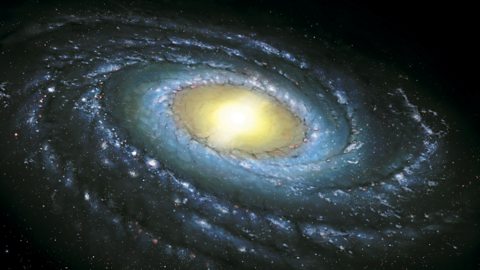
Even today, quenching continues. While some galaxies are actively giving birth to stars, others are slowly shutting down or have already gone dark in stellar terms. The Milky Way itself is still forming stars, but at a far slower rate than in the past. Someday, it too may become quenched.
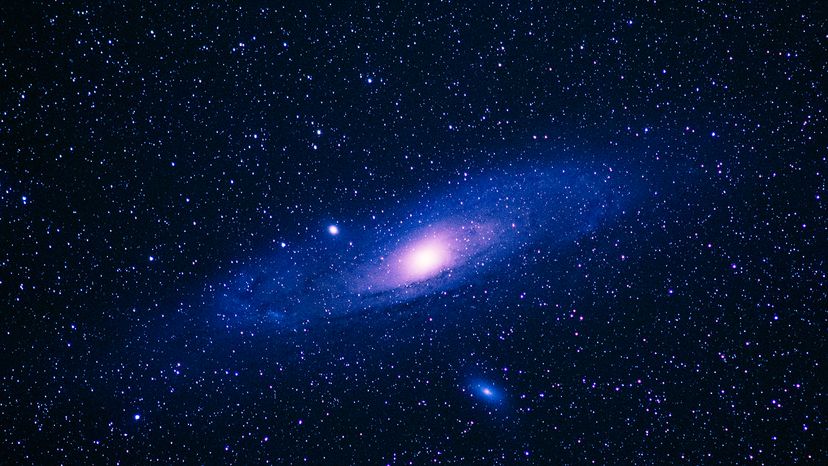
There is speculation that when the Milky Way eventually collides with the Andromeda galaxy, the resulting disruption could trigger a final wave of star formation, followed by a permanent quenching. This future galaxy, sometimes called “Milkomeda,” may become a massive, quiet elliptical galaxy filled with old stars and little else.
The Quiet Beauty of Cosmic Endings
Though the word “death” may sound grim, a quenched galaxy is not lifeless. It still contains billions or trillions of stars, along with planets, nebulae, and dark matter. It simply no longer produces new stars. In a way, it has reached a kind of cosmic maturity, a stable old age after a long, luminous youth.
There is a quiet elegance in these ancient systems, drifting through space, carrying the memory of their explosive beginnings. Quenching is not the end of a galaxy’s existence, but the closing of one chapter and the beginning of another.
By understanding why galaxies stop forming stars, astronomers gain insight not only into how galaxies die, but also into how they live. Quenching reveals the delicate balance of forces that govern creation and destruction across unimaginable distances and timescales.
About the Author
