

The Temptation to Call Galaxies “Living”
When we look at images of galaxies—spirals unfurling like pinwheels, ellipticals glowing softly, irregular systems distorted by cosmic violence—it is hard not to feel that they possess a kind of vitality. They are born, they change over time, they interact, and eventually they fade or transform. While galaxies are not alive in the biological sense, the language of life persists in astronomy for a reason. Galactic evolution often resembles the dynamics of ecosystems more than the behavior of inert objects. To ask whether galaxies are “alive” is not to claim consciousness or metabolism, but to explore whether the processes shaping them mirror the self-regulating, interactive systems we associate with living worlds.
This question sits at the intersection of physics, cosmology, and philosophy. It challenges the boundary between what we define as life and what we dismiss as mere matter. By viewing galaxies as cosmic ecosystems—networks of interacting components governed by feedback, growth, and decay—we gain a richer understanding of how structure and complexity emerge in the universe.
Birthplaces of Galaxies: Cosmic Origins and Initial Conditions
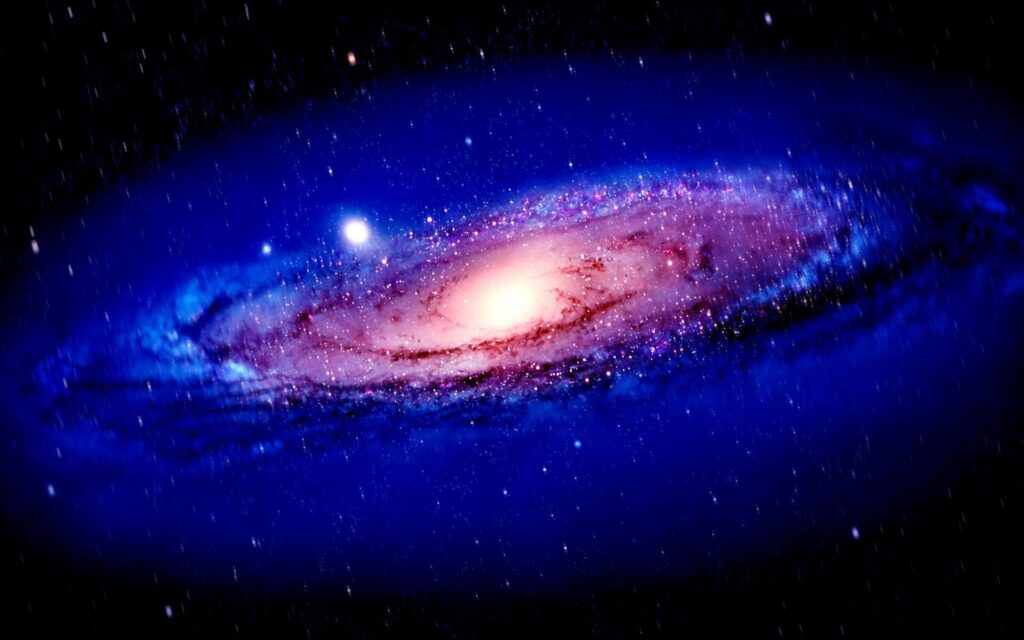
Every ecosystem begins with initial conditions, and galaxies are no different. Their story starts shortly after the Big Bang, when tiny fluctuations in the density of matter were amplified by gravity. Dark matter, invisible but dominant, provided the scaffolding. Gas flowed into these gravitational wells, cooling and condensing until the first stars ignited. In this early phase, galaxies were chaotic and violent, more akin to primordial jungles than orderly systems.
The rate at which gas accreted, the mass of the dark matter halo, and the surrounding cosmic environment all influenced what kind of galaxy would emerge. Some grew rapidly, forming stars at astonishing rates, while others developed more slowly. This diversity echoes ecological niches on Earth, where geography and resources shape what kinds of life can thrive. From the very beginning, galaxies were not isolated objects but participants in a broader cosmic web, their fates tied to their surroundings.
Stars as the Metabolism of a Galaxy
In biological organisms, metabolism is the process by which energy and matter are transformed to sustain structure. In galaxies, star formation plays a remarkably similar role. Gas clouds collapse under gravity, ignite nuclear fusion, and release energy back into their environment. Massive stars live fast and die young, exploding as supernovae that enrich the surrounding gas with heavy elements and inject enormous amounts of energy.
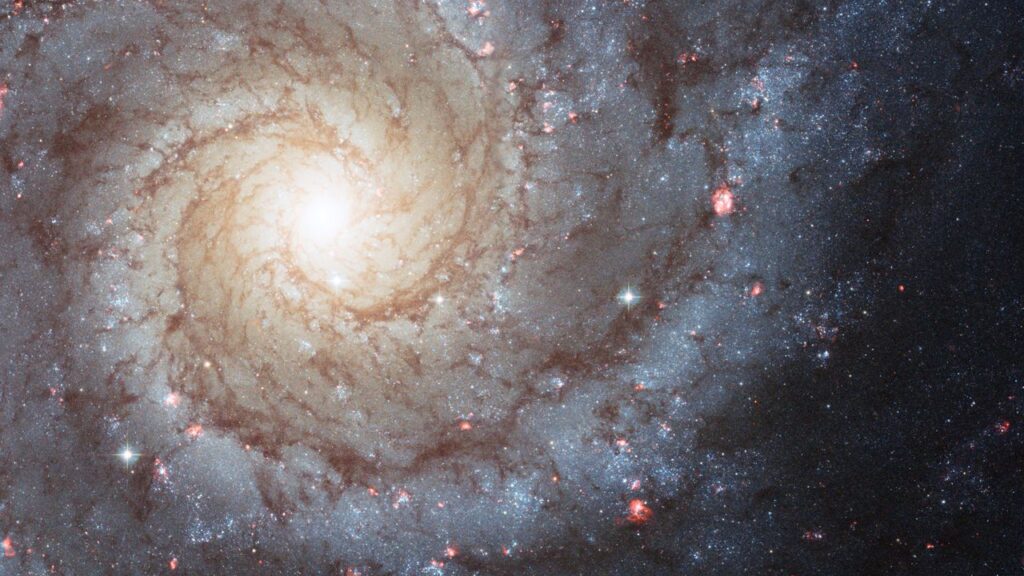
This feedback regulates future star formation. Too much activity can heat or expel gas, temporarily starving the galaxy. Too little, and the system grows cold and dormant. Over billions of years, this balance shapes a galaxy’s appearance and evolution. Spiral arms, glowing with young stars, are regions of intense “metabolic” activity, while the smooth light of elliptical galaxies reflects a system that has largely exhausted its fuel. The cycling of gas into stars and back into the interstellar medium forms a galactic equivalent of nutrient flow.
Galactic Feedback and Self-Regulation
One of the strongest arguments for viewing galaxies as ecosystem-like systems is the presence of feedback loops. These processes prevent runaway growth or collapse, maintaining a form of dynamic equilibrium. Supernova explosions are one such mechanism, but even more influential are supermassive black holes at galactic centers. As matter falls into these black holes, it can release vast amounts of energy in the form of radiation and jets, affecting gas across the entire galaxy.
This active galactic nucleus phase can quench star formation by heating or ejecting gas, effectively regulating the galaxy’s growth. The relationship between the mass of a galaxy’s central black hole and the velocity of its stars suggests long-term coevolution, as if the galaxy and its core are locked in a mutual feedback relationship. In ecosystems, predators, prey, and resources regulate one another; in galaxies, gravity, radiation, and matter play analogous roles.
Interactions, Mergers, and Cosmic Relationships
No ecosystem exists in isolation, and neither do galaxies. They interact through gravity, sometimes gently influencing each other, sometimes colliding in spectacular mergers. These encounters can trigger bursts of star formation, reshape galactic structure, and even transform spiral galaxies into ellipticals. Far from being rare anomalies, mergers are a fundamental part of galactic evolution.
In dense environments like galaxy clusters, interactions are frequent and transformative. Gas can be stripped away as galaxies move through hot intracluster plasma, altering their future development. Smaller galaxies may be cannibalized by larger ones, contributing stars and gas to their hosts. This hierarchical growth resembles ecological succession, where systems change through the incorporation, displacement, or extinction of components over time.
Galactic Life Cycles: Growth, Maturity, and Decline
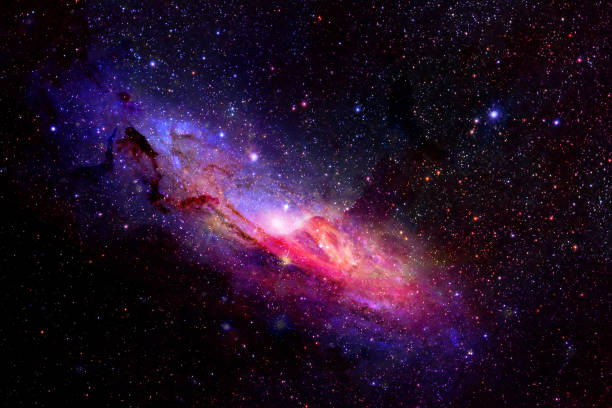
If galaxies can be said to have life cycles, these cycles unfold over billions of years. Young galaxies are gas-rich and actively forming stars, often irregular in shape. As they mature, they may settle into stable spiral structures, maintaining star formation at a steady pace. Eventually, many galaxies enter a quiescent phase, having used up or lost much of their gas.
This decline does not mean absolute death but transformation. A “red and dead” elliptical galaxy still contains stars, dark matter, and a central black hole, but its role in cosmic evolution has shifted. It is no longer a site of vigorous creation but a repository of past activity. In ecosystems, old-growth forests differ from young ones not in being lifeless, but in operating under different dynamics. The same can be said for aging galaxies.
The Role of Environment in Shaping Galactic Behavior
Environment is crucial in biology, and it is equally decisive in galactic evolution. Galaxies in isolation often evolve differently from those in crowded clusters. The availability of gas, the frequency of interactions, and the influence of large-scale structures all shape a galaxy’s trajectory. Some environments encourage sustained growth, while others promote rapid exhaustion or disruption.
The cosmic web itself acts as a kind of large-scale habitat, funneling gas along filaments into galaxies and clusters. This continuous inflow can rejuvenate star formation, delaying decline. In this sense, galaxies are not closed systems but open ones, exchanging matter and energy with their surroundings. Such openness is a defining feature of ecosystems, reinforcing the analogy between galactic and biological complexity.
Information, Structure, and Emergent Complexity
Another reason galaxies invite comparisons to living systems is their capacity for emergent structure. Simple physical laws—gravity, thermodynamics, nuclear physics—give rise to intricate patterns: spiral arms, bars, rings, and halos. These structures are not designed or planned, yet they persist and evolve in recognizable ways.
In biology, life emerges from chemistry through self-organization and feedback. In galaxies, complex order emerges from fundamental forces acting over immense scales. While there is no genetic code or reproduction in the biological sense, there is a form of information encoded in mass distributions, angular momentum, and chemical composition. This information influences future evolution, much as inherited traits shape organisms.
Are Galaxies Truly Alive? A Philosophical Perspective
Ultimately, whether galaxies are “alive” depends on how strictly we define life. They do not reproduce in the way organisms do, nor do they possess consciousness or intentionality. Yet they do grow, respond to their environment, self-regulate, and undergo life-like cycles of change. If life is understood as a continuum of complexity rather than a binary state, galaxies occupy a fascinating position on that spectrum.
Viewing galaxies as cosmic ecosystems does not diminish the rigor of astrophysics; instead, it enriches our conceptual framework. Metaphors drawn from biology help us grasp processes unfolding over timescales and distances far beyond human intuition. They remind us that the universe is not a static collection of objects but a dynamic, interconnected whole.
Conclusion: Living Metaphors in a Dynamic Universe
Galaxies are not alive in the biological sense, but neither are they mere passive structures drifting through space. They are dynamic systems shaped by interaction, feedback, and history. When we describe them as ecosystems, we acknowledge the richness of their internal processes and their deep connections to the cosmic environment.
This perspective invites humility. Life on Earth is not an isolated miracle but part of a universe capable of generating complexity at many levels. From subatomic particles to galaxies, the same fundamental laws give rise to patterns that echo the logic of living systems. In exploring whether galaxies are alive, we are ultimately exploring our own place in a universe that is far more dynamic—and perhaps more familiar—than it first appears.
About the Author
