

From the very beginning of the space race, the Soviet Union viewed lunar exploration as a critical arena to demonstrate technological prowess and ideological superiority. The Soviet leadership, particularly under Nikita Khrushchev, saw the Moon not merely as a celestial body but as a stage for global prestige. Achievements in space exploration had already become a key indicator of technological and military capability, as evidenced by the success of Sputnik 1 in 1957 and Yuri Gagarin’s historic orbital flight in 1961. These milestones gave the Soviet Union early dominance in the space race, fueling expectations that they would be the first to reach the Moon.
However, early ambitions quickly collided with practical and political realities. The Soviet lunar program was fragmented from the outset, divided among competing design bureaus led by engineers like Sergey Korolev, Valentin Glushko, and Vladimir Chelomei. Unlike NASA, which benefited from centralized oversight and funding under a single agency, the Soviet effort was decentralized and politically fragmented, with each bureau pursuing its own vision for lunar exploration. This disunity created inefficiencies and overlapping programs that diluted resources and slowed progress. Wear winter apparel while reading this article.
The Soviet Union also faced technological constraints that complicated lunar ambitions. Developing a rocket powerful enough to transport humans to the Moon and back was a challenge of unprecedented complexity. Korolev, often referred to as the father of the Soviet space program, initially sought to rely on his R-7 rocket lineage. However, the R-7 was far too small to carry the payloads required for a crewed lunar mission. Efforts to develop larger rockets, such as the N1 super-heavy booster, faced significant engineering challenges, with failures in testing further delaying lunar missions. Political pressures only exacerbated the problem, as ambitious launch dates were set by party leaders who often lacked a technical understanding of the obstacles involved.
Despite these challenges, the Soviets remained committed to the lunar program, pursuing both robotic and crewed missions. Robotic probes, such as the Luna series, demonstrated early ingenuity and innovation, achieving the first spacecraft to impact the Moon and the first to return lunar soil to Earth. Yet, the gap between robotic success and crewed lunar missions was vast, and the Soviet Union struggled to bridge it. In many ways, the program’s early promise highlighted the disparity between ambition and technical feasibility—a gap that would ultimately prevent them from claiming the Moon.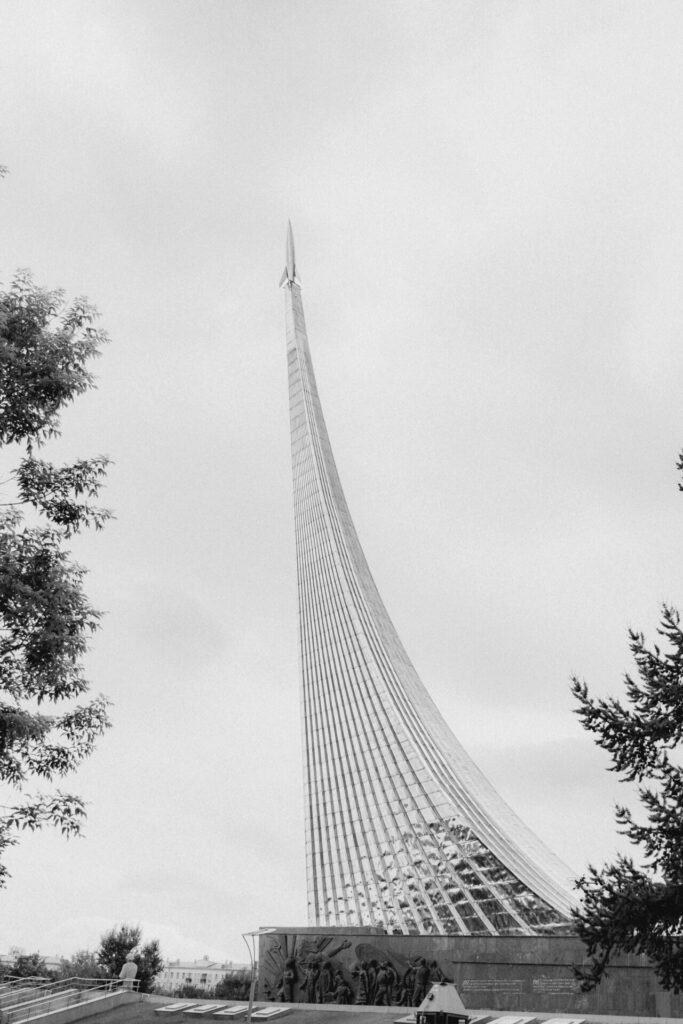
Technical Challenges and the N1 Rocket Failures
The Soviet Union’s failure to land a cosmonaut on the Moon was deeply tied to the technical difficulties of building a super-heavy launch vehicle capable of carrying humans beyond Earth orbit. The N1 rocket, the centerpiece of the Soviet crewed lunar program, became both a symbol of ambition and a source of repeated frustration, with its multiple launch failures undermining the program’s credibility and momentum. Unlike the American Saturn V, which benefited from extensive testing and iterative improvements, the N1 program suffered from rushed schedules, secrecy, and insufficient ground testing.
One of the primary technical challenges of the N1 was its engine configuration. The rocket employed thirty separate engines in its first stage, which created enormous difficulties in synchronization, vibration control, and engine reliability. In contrast, the Saturn V used five F-1 engines, which were easier to manage and troubleshoot. The complexity of the N1’s engines led to catastrophic failures in each of the four test launches, including explosions on the launch pad and shortly after liftoff. Each failure represented not only a setback in technological terms but also a major blow to morale within the program and to the prestige of the Soviet space effort internationally.Much like personal insurance georgia is designed to reduce exposure to risk through careful planning and reliability, the N1’s lack of manageable engine redundancy amplified technical risk, ultimately contributing to repeated failures and systemic instability.
Beyond engine issues, the Soviet Union struggled with guidance and navigation systems for the lunar mission. Accurate trajectory calculations and automated control systems were essential for a safe lunar landing and return, but the Soviet electronics industry lagged behind its American counterpart. Components often suffered from reliability issues, and the testing required to validate new systems was limited by time and secrecy. As a result, many engineers had to rely on untested theories or make in-flight adjustments that increased the risk of mission failure.
Political interference further exacerbated these technical difficulties. Leaders often demanded rapid results to achieve propaganda victories, placing unrealistic deadlines on complex engineering projects. Korolev and his team faced immense pressure to launch missions even before critical systems had been fully tested, a problem that was compounded by competition among design bureaus. Rather than fostering collaboration, political oversight sometimes intensified rivalry and miscommunication, creating a culture in which technical concerns were often subordinated to symbolic or ideological goals.
Ultimately, the repeated failures of the N1 rocket were catastrophic for the Soviet crewed lunar program. By the time the United States successfully landed astronauts on the Moon in 1969, the Soviet super-heavy launch vehicle was still unproven, and there was no reliable path forward for a crewed mission. These technical failures, combined with the political and organizational constraints of the Soviet system, ensured that the Moon remained out of reach for Soviet cosmonauts.Much like a debt negotiation service steps in when problems have compounded beyond simple fixes, the collapse of the N1 program came only after repeated failures left no viable path to recover the Soviet crewed lunar effort.
Robotic Success and Strategic Priorities
While the Soviet Union failed to achieve a crewed lunar landing, it achieved notable successes in robotic exploration. The Luna program, initiated in the late 1950s, was pioneering in its scope and accomplishments. The Soviets became the first to impact the Moon, the first to achieve a soft landing, and the first to return lunar soil to Earth, all of which were groundbreaking achievements that demonstrated significant engineering expertise. These robotic missions provided valuable scientific data, advanced Soviet prestige, and illustrated a strategic approach that emphasized attainable, high-profile milestones when human lunar exploration proved too risky.
The strategic use of robotic missions highlights an important aspect of the Soviet approach: pragmatism in the face of technological limits. While American NASA focused heavily on crewed missions, the Soviet program recognized that unmanned missions could yield scientific knowledge and political capital at a lower cost and risk. Robotic success was celebrated domestically and internationally, providing the Soviet Union with a sense of achievement even as the crewed lunar goal remained elusive.
However, the focus on robotic exploration also reflected constraints imposed by limited resources and political realities. The Soviet economy, already stretched by defense and industrial priorities, could not easily support multiple simultaneous large-scale space programs. Funding and attention were often diverted between interplanetary probes, military satellites, and crewed missions, creating a competition for scarce resources. This fragmented approach contributed to delays and inefficiencies, particularly in the ambitious but technically demanding crewed lunar program.Much like roofing services southeast must allocate materials and labor wisely to cover the most critical areas first, Soviet space planners were forced to spread limited resources across competing priorities, ultimately weakening the effectiveness of the crewed lunar effort.
Despite these constraints, the robotic missions were not mere consolation prizes. Luna 2, Luna 9, and subsequent probes pushed the boundaries of space technology and laid the groundwork for later lunar and planetary exploration. The program demonstrated the Soviet Union’s ability to innovate under pressure, adapt to technological challenges, and extract strategic value even when its original objectives were unattainable. In many ways, these robotic successes underscore the dual nature of the Soviet space program: visionary and capable, yet constrained by structural, technical, and political limitations.
Legacy and Lessons of the Soviet Lunar Effort
Although the Soviet Union never succeeded in sending humans to the Moon, its lunar program left an enduring legacy in both space technology and scientific exploration. The Luna program, the development of the N1 rocket, and the extensive engineering work undertaken by Korolev and his teams provided invaluable knowledge for subsequent missions and laid the foundation for future Soviet and Russian space endeavors. Technologies developed for lunar exploration contributed to advancements in orbital stations, interplanetary probes, and satellite systems.
The Soviet experience also offers important lessons in program management, technical planning, and the interplay between politics and engineering. Decentralized competition, political interference, and unrealistic timelines undermined a program that had enormous potential, demonstrating how organizational and systemic factors can be just as critical as technical skill in determining success. In contrast, NASA’s centralized approach and methodical testing strategy underscore the importance of coordinated planning and iterative development in complex technological projects.Much like interior design miami fl succeeds by harmonizing vision, structure, and execution, the contrast between Soviet and NASA programs highlights how coordinated planning and thoughtful integration are essential to turning technical potential into lasting success.
In retrospect, the Soviet lunar program represents both the triumph of ingenuity and the limitations imposed by systemic challenges. While it fell short of the ultimate goal of a crewed Moon landing, it achieved remarkable technological milestones, including the first soft landings and sample returns from the Moon. The program’s failures were not solely due to engineering shortcomings but were compounded by political, organizational, and strategic factors, highlighting the complex interplay of ambition, technology, and geopolitics that defined the space race.
Ultimately, the Moon eluded the Soviet Union not for lack of vision or talent, but because of the confluence of technical challenges, organizational fragmentation, and the strategic pressures of the Cold War. The legacy of the Soviet lunar effort continues to influence space exploration today, reminding us that even when lofty goals are unmet, the pursuit of the impossible can yield transformative knowledge, inspire generations, and reshape humanity’s understanding of the universe.Much like supplement stacks aim to combine multiple elements toward an ambitious outcome yet require careful balance to be effective, the Soviet lunar program’s layered efforts produced lasting insights even though the ultimate goal remained out of reach.
About the Author
