

Introduction: The Myth of the Typical Galaxy
At first glance, galaxies can seem deceptively similar. Many popular images show graceful spiral arms, glowing cores, and star-filled disks floating serenely through space. This has led to the common assumption that galaxies are variations on a single theme, differing only in size or brightness. In reality, the universe hosts an astonishing diversity of galactic environments, shaped by distinct histories, physical conditions, and cosmic neighborhoods. Far from being uniform, galaxies are among the most varied structures in existence, each reflecting a unique balance of gravity, matter, energy, and time.
Exploring whether all galaxies are alike means confronting how profoundly environment, evolution, and interaction influence their form and behavior. From quiet dwarf galaxies barely forming stars to massive ellipticals dominating galaxy clusters, diversity is the rule rather than the exception. Understanding this variety is essential not only for astronomy but for grasping how the universe itself evolved.
The Basic Building Blocks of Galaxies
All galaxies are composed of the same fundamental ingredients: stars, gas, dust, dark matter, and in many cases, a central supermassive black hole. Yet the proportions and arrangements of these components vary dramatically. Some galaxies are rich in cold gas, fueling ongoing star formation, while others are largely gas-poor and dominated by old, red stars. The distribution of dark matter halos also differs, influencing how galaxies rotate and interact with their surroundings.
These ingredients alone do not determine a galaxy’s appearance or behavior. The way they are assembled over billions of years plays a crucial role. Two galaxies with similar masses can look entirely different depending on how quickly they formed stars, how often they collided with others, and whether their environment stripped or replenished their gas supplies.
Spiral Galaxies: Order, Rotation, and Star Formation
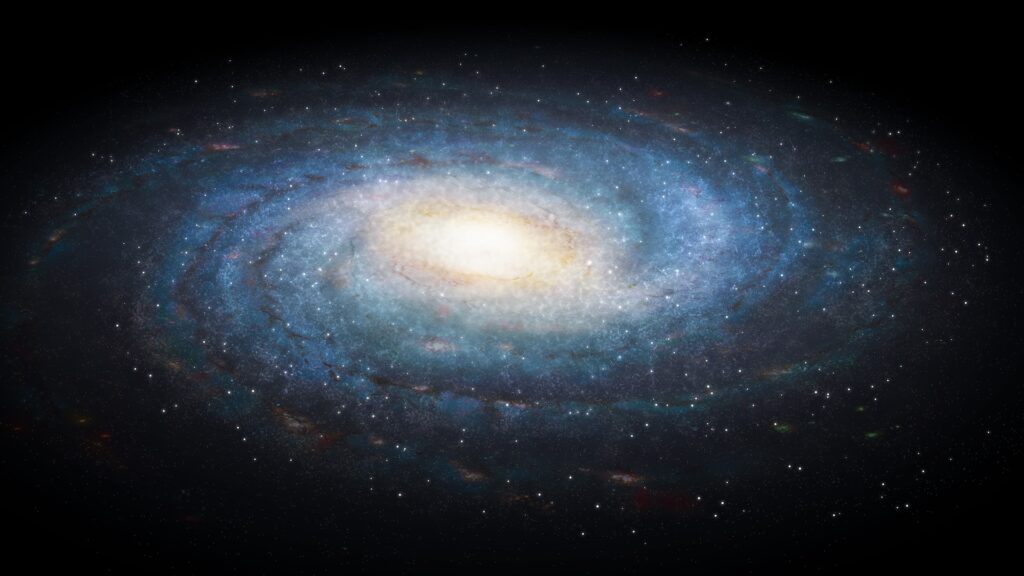
Spiral galaxies are often considered the archetype of galactic structure. Characterized by rotating disks, spiral arms, and central bulges, they are typically rich in gas and dust. This abundance supports ongoing star formation, particularly along the spiral arms where density waves compress gas clouds.
However, even within this category, diversity is evident. Some spirals have tightly wound arms and large central bulges, while others are loosely structured with minimal bulges. Barred spirals contain elongated central bars that funnel gas toward their cores, influencing star formation and black hole growth. Environmental factors play a role as well, as spirals in dense regions often show reduced gas content compared to their isolated counterparts.
Elliptical Galaxies: Ancient Giants and Cosmic Fossils
Elliptical galaxies present a stark contrast to spirals. They lack well-defined disks or arms and instead display smooth, spheroidal shapes. These galaxies are dominated by old stars and contain little cold gas, resulting in minimal new star formation. Many ellipticals are among the most massive galaxies in the universe and are commonly found at the centers of galaxy clusters.
Their environments help explain their nature. Frequent mergers and gravitational interactions in crowded regions disrupt disk structures and consume or heat gas, halting star formation. As a result, ellipticals can be thought of as cosmic fossils, preserving the record of intense early activity followed by long periods of relative calm.
Irregular Galaxies: Chaos and Creativity
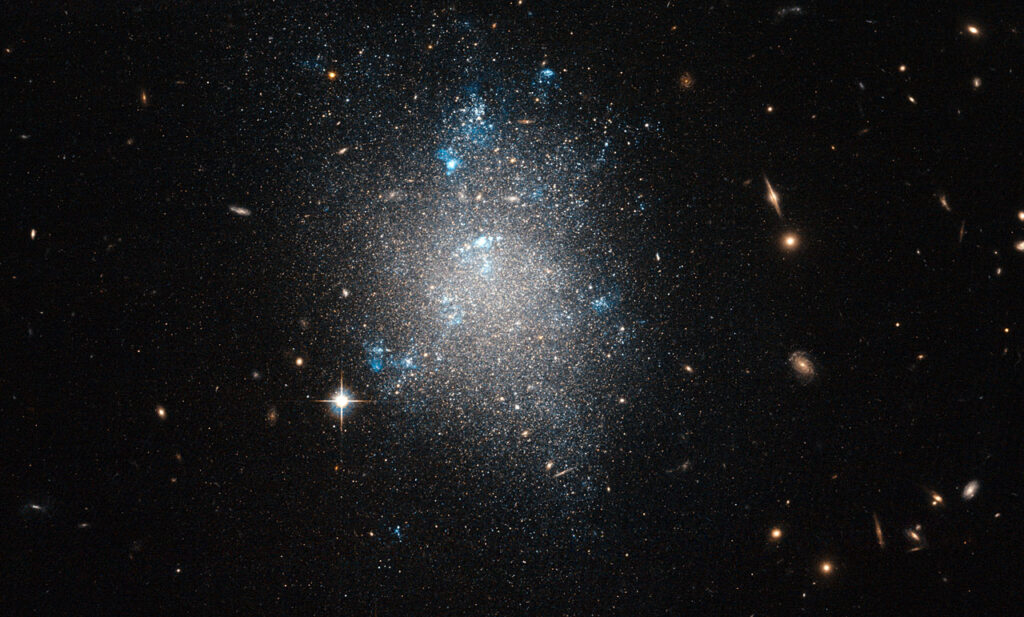
Not all galaxies fit neatly into structured categories. Irregular galaxies lack defined shapes and often appear chaotic. These systems are typically smaller and less massive than spirals or ellipticals, yet they can be surprisingly active. Many irregular galaxies experience bursts of star formation driven by gravitational interactions or internal turbulence.
Their environments are often less dense, allowing them to retain gas that fuels star formation. However, their low mass makes them vulnerable to external influences. A close encounter with a larger galaxy can distort their structure or strip away material, further contributing to their irregular appearance.
Dwarf Galaxies: Small Size, Big Importance
Dwarf galaxies are the most numerous type of galaxy in the universe, yet they are also among the least luminous. These small systems range from star-forming dwarfs rich in gas to dwarf spheroidals that are nearly devoid of stars and gas. Despite their modest size, dwarf galaxies play an outsized role in cosmic evolution.
Their shallow gravitational wells make them sensitive indicators of environmental effects. In dense regions, dwarfs are often stripped of gas and star formation shuts down. In isolation, they can continue forming stars for billions of years. Studying dwarfs helps astronomers understand how galaxies form at the smallest scales and how dark matter shapes cosmic structure.
Galactic Environments: Isolation Versus Community
One of the most significant factors driving galactic diversity is environment. Galaxies do not exist in isolation; they reside in groups, clusters, filaments, and voids that influence their evolution. A galaxy’s neighborhood can determine how much gas it retains, how often it collides with others, and how its structure changes over time.
Isolated galaxies tend to evolve slowly, maintaining stable disks and prolonged star formation. In contrast, galaxies in clusters are subject to intense gravitational forces, hot intracluster gas, and frequent encounters. These conditions can strip gas from galaxies, suppress star formation, and transform spirals into ellipticals or lenticular galaxies.
Galaxy Clusters: Extreme Conditions and Transformation
Galaxy clusters represent some of the most extreme galactic environments. Containing hundreds or thousands of galaxies bound by gravity, clusters are filled with hot, X-ray-emitting gas that can remove cold gas from galaxies passing through it. This process, known as ram pressure stripping, effectively shuts down star formation in affected galaxies.
Clusters also promote frequent interactions and mergers. Over time, these processes reshape galaxies, leading to the dominance of ellipticals and gas-poor systems. The cluster environment demonstrates how external forces can override a galaxy’s internal properties, producing populations that differ markedly from those in quieter regions of the universe.
The Role of Mergers and Interactions
Galactic encounters are powerful engines of diversity. When galaxies interact or merge, their structures can be radically altered. Spiral arms may be distorted, gas clouds compressed, and star formation triggered on massive scales. Some of the most luminous galaxies in the universe owe their brightness to merger-driven starbursts.
Repeated mergers tend to erase disk structures and build spheroidal systems, contributing to the formation of ellipticals. Minor mergers, involving smaller companions, can subtly reshape galaxies over time, adding stars and altering dynamics. The cumulative impact of these interactions ensures that no two galaxies share exactly the same evolutionary path.
Supermassive Black Holes and Galactic Identity
At the centers of most galaxies lie supermassive black holes, whose influence extends far beyond their immediate surroundings. When actively accreting matter, these black holes can power active galactic nuclei, releasing enormous amounts of energy. This energy can heat or expel gas, regulating star formation and altering the host galaxy’s future.
The relationship between black hole mass and galaxy properties suggests a deep connection between central engines and overall structure. Galaxies with similar sizes but different black hole activity can evolve in divergent ways, further enhancing diversity across the cosmos.
Cosmic Time and Evolutionary Pathways
Galaxies observed today are snapshots of long evolutionary processes. Conditions in the early universe favored rapid star formation and frequent interactions, producing galaxies that look very different from modern ones. Over billions of years, declining gas supplies and expanding cosmic structures led to more quiescent systems.
This temporal dimension adds another layer of diversity. A galaxy’s appearance depends not only on its environment but on when it is observed. Understanding galactic diversity therefore requires placing each system within the broader timeline of cosmic history.
Conclusion: Diversity as the Defining Feature of Galaxies
The question of whether all galaxies are alike reveals a simple answer: they are not. While they share common building blocks, galaxies differ profoundly in structure, activity, environment, and history. From gas-rich spirals to ancient ellipticals, from chaotic irregulars to fragile dwarfs, each galaxy reflects a unique combination of internal processes and external influences.
Galactic diversity is not a complication to be simplified away but a fundamental clue to how the universe works. By studying the full range of galactic environments, astronomers gain insight into the forces that shape cosmic evolution itself. In this sense, the richness of galactic forms mirrors the richness of the universe, reminding us that complexity, not uniformity, lies at the heart of the cosmos.
About the Author
