

The universe has no written history. There are no stone inscriptions chiseled into the void, no surviving scrolls from the first billion years after the Big Bang, and no eyewitness accounts of the earliest galaxies flickering to life. Yet astronomers have learned to read the cosmos in another way. They have turned stars into archives, stellar chemistry into ancient text, and constellations of data into stories of forgotten eras. This emerging field—galactic archaeology—seeks to reconstruct the Milky Way’s distant past by studying the oldest, rarest, and most pristine stars. These “stellar fossils” act as living witnesses to the earliest chapters of cosmic evolution, preserving chemical signatures that predate the Sun by billions of years.
Although the term suggests the tools of earthly archaeology, the practice takes place across light-years and epochs. Galactic archaeologists do not sift through sand but through stellar spectra, carefully separating the fingerprints of elements forged before the Milky Way had even taken its present shape. Their goal is nothing less than to rebuild the genealogy of our galaxy, uncovering how ancient star clusters merged, migrated, collided, and were cannibalized to produce the spiral city of stars we inhabit today.
As technology becomes more precise and sky surveys more comprehensive, a clearer picture is emerging. What these ancient stars reveal is not only the story of the Milky Way but also the lost eras of cosmic history—the time before galaxies evolved into the familiar forms we see today, when the universe was young, turbulent, and radically different from the world we know.
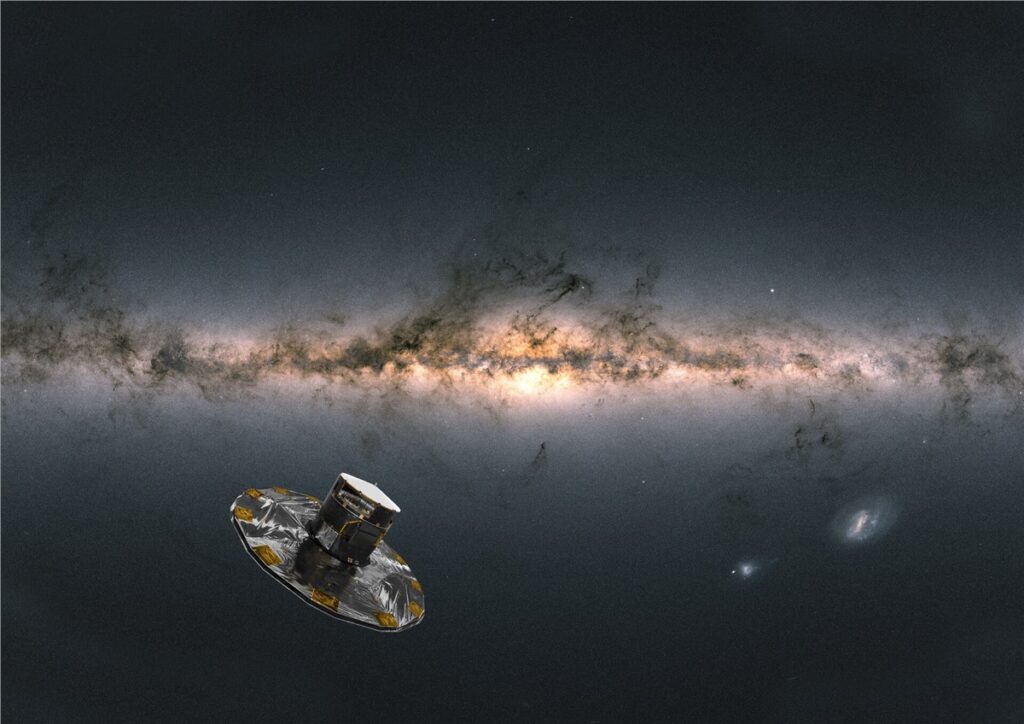
The First Clues: Metal-Poor Stars and the Chemical Fingerprints of the Early Universe
In astronomy, “metals” refer to any element heavier than hydrogen or helium. Since the universe began with almost none of them, stars born early in cosmic history contain extremely small amounts of these heavier elements. Such stars are called “metal-poor,” and they are the primary fossils galactic archaeologists study.
The oldest metal-poor stars were born when the cosmos was only a few hundred million years old. Their atmospheres have remained largely unchanged, allowing scientists to examine the elemental ratios preserved within them as if examining primordial DNA. These chemical patterns reveal what the universe was capable of producing at the time—what kinds of supernovae exploded, what elements were common or rare, and what early stellar populations looked like.
The rarest of these, known as ultra-metal-poor stars, contain only one ten-thousandth of the iron found in the Sun. Their scarcity highlights their importance: they offer glimpses into the earliest generations of stars, including the elusive Population III stars, which were massive, short-lived, and composed only of hydrogen and helium. Although none of these first-generation stars survive today, their chemical aftermath is suspended within their descendants. By reading the elemental fingerprints in today’s ancient stars, researchers can infer the properties of the stars that came before them—giants that exploded before the Milky Way even began to swirl into form.
Unraveling the Milky Way’s Past Through Stellar Motion
Galactic archaeology is not only about chemistry but also about dynamics. Just as earthly archaeologists examine both artifacts and their locations, astronomers study how stars move to trace their origins.
Some ancient stars follow unusually elongated orbits or move opposite to the rotation of the galaxy. Others travel in coherent streams stretching thousands of light-years across the sky. These patterns hint at violent events in the Milky Way’s past: the swallowing of dwarf galaxies, the merging of early star clusters, and the redistribution of stars as gravitational tides tore smaller systems apart.
One landmark discovery emerged in recent years when astronomers identified a large population of stars with similar low metallicity and strange motions, forming what is now known as the Gaia-Enceladus or Sausage galaxy remnant. These stars were once part of a dwarf galaxy that collided with the young Milky Way about ten billion years ago. The collision shook the Milky Way’s structure and contributed significantly to its growth. Without the detailed mapping of stellar movements—enabled by modern observatories and space telescopes—this forgotten cosmic event might never have been uncovered.
Through such reconstructions, galactic archaeologists have begun to piece together a timeline of mergers, disruptions, and accretions. The Milky Way, like many large galaxies, is a survivor of countless assimilations. Each ancient star fossil is a clue to one chapter in that long and tumultuous journey.
Chemical Anomalies and the Ghosts of Forgotten Stellar Generations
Some ancient stars exhibit chemical signatures that do not match typical supernova models. They contain large amounts of carbon relative to iron or unusual proportions of elements created by slow or rapid neutron-capture processes. These anomalies suggest that early cosmic environments were far more diverse—and far more chaotic—than once imagined.
One particularly intriguing category is the carbon-enhanced metal-poor (CEMP) stars. These stars contain so much carbon compared to iron that traditional chemical evolution models could not initially explain them. Their existence has forced astronomers to reconsider how the first supernovae enriched the universe. Some may have resulted from faint supernovae that expelled carbon-rich outer layers while trapping iron within the collapsing core. Others might carry signatures of mass transfer from once-nearby stars that have long since vanished.
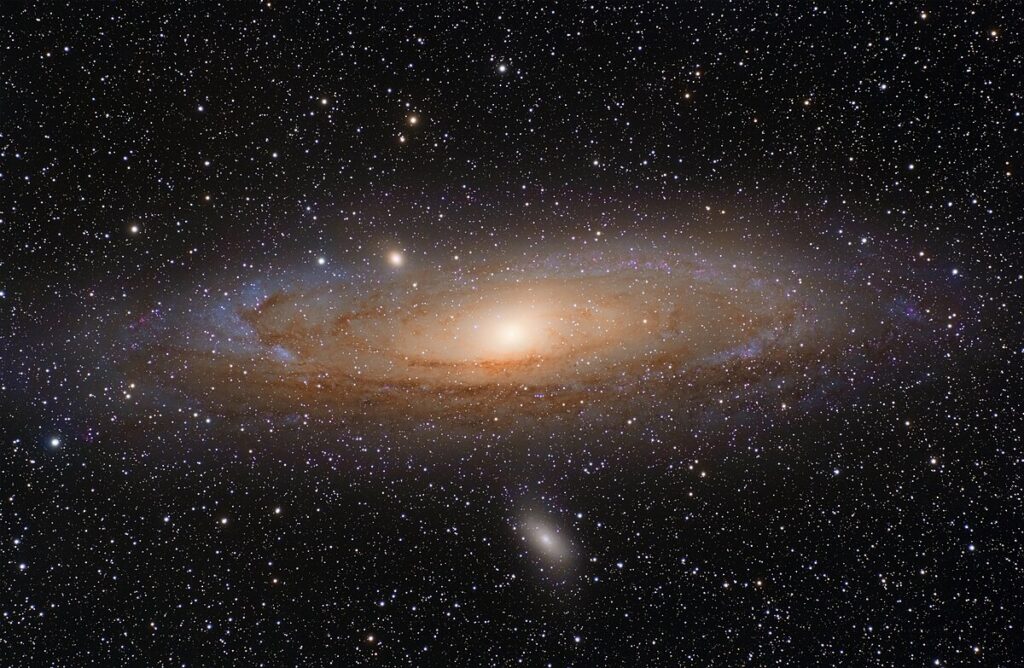
Globular Clusters as Time Capsules of the Galactic Halo
Globular clusters—dense spherical groups of up to a million stars—represent some of the oldest structures in the Milky Way. They are tightly bound and incredibly stable, surviving cosmic collisions that shredded other early systems. Their ages often exceed twelve billion years, making them nearly as old as the universe itself.
For galactic archaeologists, globular clusters offer rare insights into conditions during the Milky Way’s formative period. Their stars tend to share similar ages and metallicities, allowing researchers to determine what the galaxy’s chemical environment was like when each cluster formed. However, many globular clusters defy early assumptions of uniform chemical composition. Some contain multiple generations of stars, each enriched by the ones that came before. This suggests that even in the earliest epochs, star formation was not a single event but occurred in cycles, influenced by the energies and winds of previous stellar generations.
Reconstructing the Milky Way’s Family Tree
By combining data on stellar chemistry, motion, age, and distribution, galactic archaeologists have begun constructing a genealogical tree of the Milky Way. The modern galaxy is the product of dozens of ancestral systems, each contributing stars, gas, and dark matter over billions of years.
The thick disk, for example, appears to contain significant populations of older stars that may have formed during or after major merger events. The halo is a mosaic of remnants—stars from various early galaxies mingled together like shards of pottery from scattered civilizations. Even the central bulge, long thought to be a simple, ancient structure, reveals a complex history when examined through detailed chemical surveys.
The Future of Galactic Archaeology: Beyond the Milky Way
While the Milky Way remains the primary laboratory for galactic archaeology, other galaxies are now coming into focus. With advanced observatories capable of resolving individual stars in nearby galaxies, researchers can compare the fossil records of vastly different systems. Dwarf galaxies orbiting the Milky Way, for instance, often preserve stars with metallicities even lower than those found in the Milky Way’s oldest populations. Like isolated villages that retained traditions long abandoned by larger civilizations, these galaxies reveal a slower, more primitive form of chemical evolution.
As instruments improve, astronomers hope to uncover stars that record the earliest phases of galaxy formation across the universe. Large telescopes currently under construction—and space missions capable of capturing higher-resolution spectra—may soon detect the chemical signatures of some of the first generations of stars in distant galaxies. Studying these “extragalactic fossils” could provide the clearest evidence yet for how universal the processes observed in the Milky Way truly are.
Why Ancient Stars Matter for Understanding Our Place in the Cosmos
At first glance, galactic archaeology may seem remote from human concerns. Yet the deeper scientists probe into ancient star fossils, the more profound the implications become. These stars tell us how the elements essential to life—carbon, oxygen, iron, phosphorus—were forged in the universe’s earliest furnaces. They reveal the chain of events that shaped our galaxy and, ultimately, the environment in which the Sun and Earth formed.
More philosophically, the field reminds us that our galaxy is not a static backdrop but a dynamic, evolving system. It has witnessed epochs of violence, growth, and transformation, all encoded in the stars that silently orbit its center. These stellar fossils allow us to read a history far older than humanity, older even than the Sun. They connect us to a cosmic lineage stretching back nearly to the universe’s birth.
About the Author
