
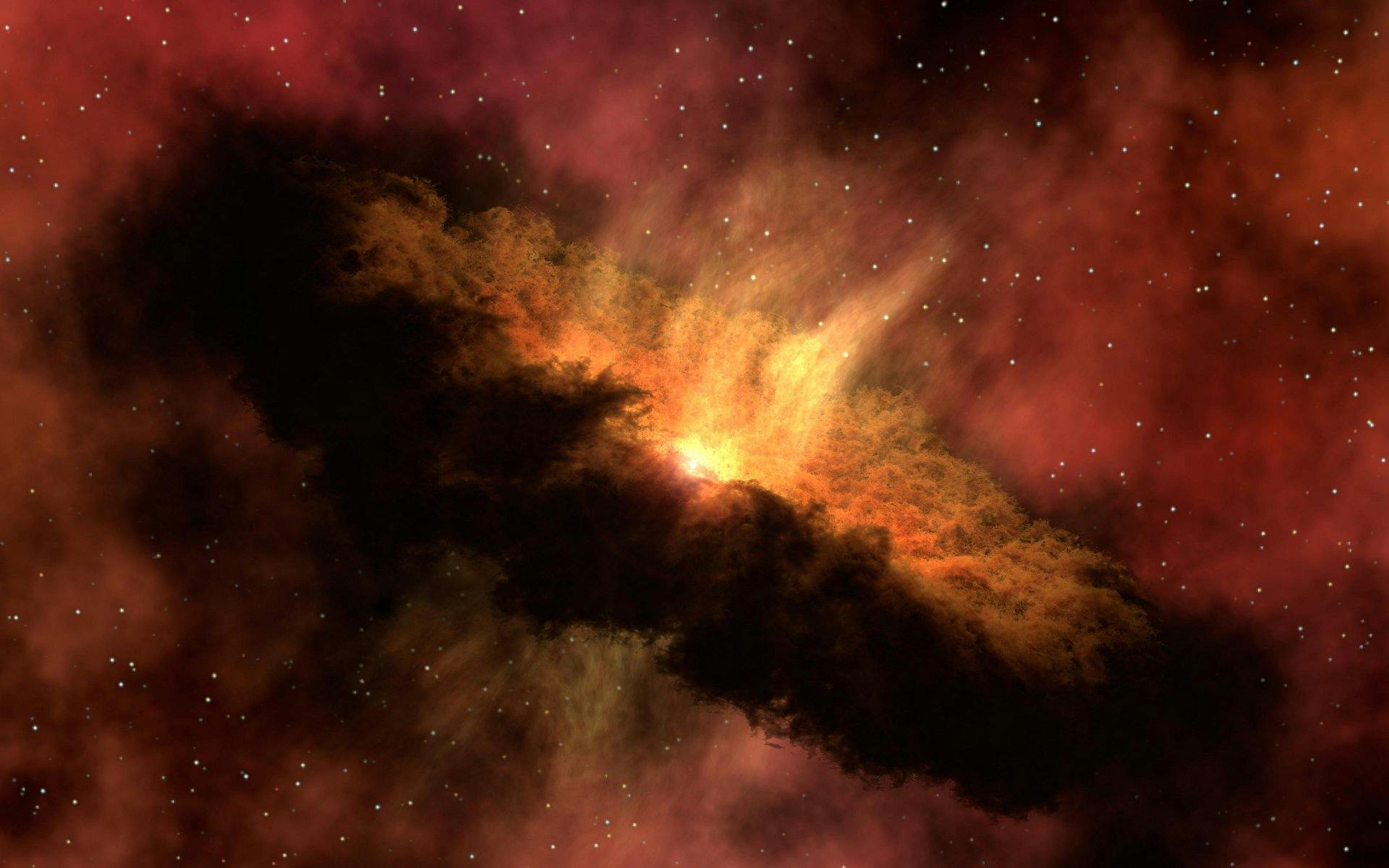
From the moment humanity looked into the night sky and saw an infinite void scattered with cold stars, the seed of cosmic fear was planted. It is a fear unlike any other — not the terror of monsters or death, but of insignificance, isolation, and the vast indifference of the universe. When space horror meets philosophy, the result is a confrontation not just with the unknown, but with the unknowable. The cosmos becomes a mirror reflecting the fragility of human existence, and horror transforms into a form of metaphysical introspection.
The roots of cosmic fear can be traced back to H.P. Lovecraft, the early 20th-century author who gave form and language to the terror of infinite space. Lovecraft’s stories — from The Call of Cthulhu to At the Mountains of Madness — embody a particular philosophical perspective often described as cosmicism, which asserts that the universe is fundamentally indifferent to human life. In Lovecraft’s vision, humanity occupies no privileged position in the cosmos; we are mere specks drifting through an uncaring void. This idea was as much philosophical as it was literary, reflecting the influence of Nietzschean nihilism and materialist determinism that pervaded the early modern era.
But cosmic horror’s reach extends far beyond Lovecraft’s New England nightmares. As scientific discoveries revealed the staggering scale of the universe — billions of galaxies, each with billions of stars — the philosophical underpinnings of cosmic fear grew more relevant. The universe became less a comforting backdrop and more a theatrical abyss, where humanity’s search for meaning faced the ultimate challenge: the realization that there might be no meaning at all.
In this sense, cosmic horror and existential philosophy are siblings. Both confront the limits of comprehension and the breakdown of human-centered narratives. When philosophers like Jean-Paul Sartre and Albert Camus described the absurdity of existence, they echoed the same tension that horror writers and filmmakers explored through the unknown reaches of space. Space horror is the dramatization of existential crisis in an infinite setting — an emotional reaction to the philosophical truth that our place in the cosmos is tenuous at best.
The Psychology of the Infinite
The terror of cosmic horror lies not in what we can see, but in what we cannot comprehend. When we look up at the night sky, our minds encounter a paradox: the beauty of the stars is inseparable from the realization that those lights are impossibly distant, and that beyond them lies an endless expanse devoid of comfort or familiarity. The psychological dimension of cosmic fear is rooted in this tension — the clash between curiosity and insignificance, wonder and despair.
Human psychology is not built to process infinity. Our brains evolved to handle immediate, tangible threats: predators, hunger, conflict. The immensity of space, by contrast, is an abstraction so immense it destabilizes our sense of self. Psychologists describe this experience as “cosmic insignificance anxiety,” a state where the vastness of the universe triggers feelings of existential despair. The realization that human life is fleeting and cosmically irrelevant can provoke a kind of cognitive vertigo — a mental freefall into meaninglessness.
Filmmakers and writers of space horror have long exploited this psychological vulnerability. In Event Horizon (1997), for instance, the titular ship’s journey into a literal void of hellish dimensions mirrors the human descent into psychological dissolution. The characters’ minds unravel not because of a tangible monster, but because they encounter the incomprehensible. Similarly, in 2001: A Space Odyssey (1968), Stanley Kubrick portrays the confrontation with the infinite as both awe-inspiring and terrifying. The silent vastness of space becomes a psychological test, stripping away every illusion of human control.
At the core of this fear is a profound loss of orientation. When faced with the infinite, our cognitive frameworks collapse. We are accustomed to finding meaning through relationships — cause and effect, good and evil, self and other. But in the cosmic perspective, these dualities dissolve. The universe operates according to indifferent physical laws; there is no moral structure written in the stars. This psychological dissonance leads to what the philosopher Eugene Thacker calls the “world-without-us” — a perspective in which the human viewpoint no longer matters. Horror arises when we glimpse this world and realize it continues, relentlessly, without our participation.
Interestingly, this fear is also accompanied by a strange attraction. Many who experience cosmic horror describe it as sublime — a mix of terror and fascination. The infinite is horrifying, but it also invites us to transcend our limitations, to expand consciousness beyond the self. This duality makes space horror uniquely powerful: it does not simply terrify us; it transforms fear into contemplation. The vast silence of the universe forces us to confront our own minds, our illusions of control, and the fragile boundaries of sanity.
In psychological terms, cosmic fear exposes the cracks in the human psyche. It reveals how much of our comfort depends on ignorance of scale — the ability to pretend that the universe revolves around us. Once that illusion shatters, we face the true horror: that meaning might not exist outside the stories we create. Space horror externalizes this revelation, transforming the philosophical into the emotional. It turns abstraction into atmosphere, and thought into terror.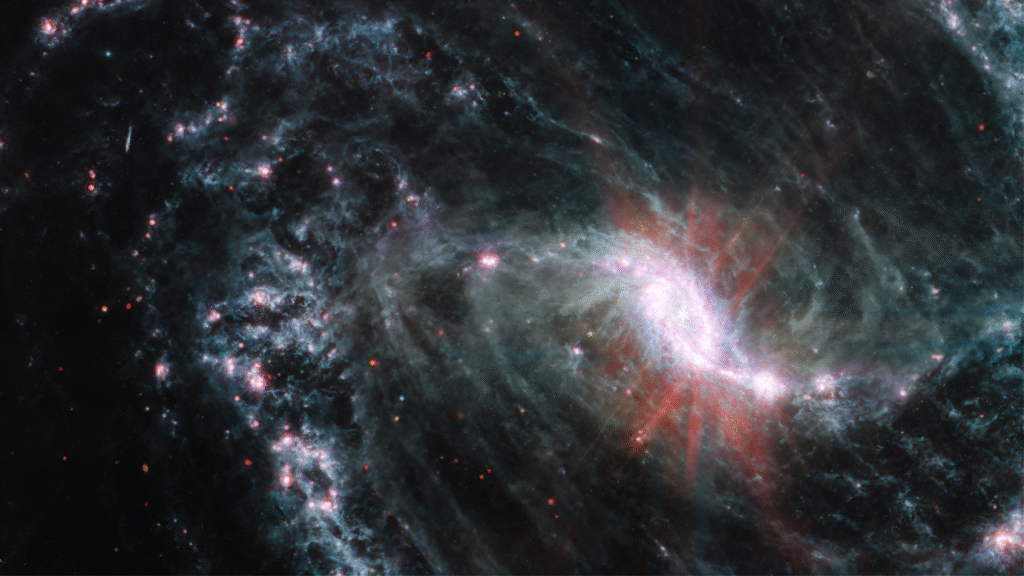
Philosophical Dimensions of Cosmic Horror
If psychology explains why cosmic horror frightens us, philosophy explains why it matters. Beneath the monsters, voids, and alien landscapes lies a profound inquiry into the nature of being itself. Cosmic horror, at its core, is a dialogue between ontology (the study of existence) and epistemology (the study of knowledge). It asks not only “What exists?” but “Can we ever truly understand what exists?” The horror arises from the possibility that the answer might be no.
In traditional horror, the threat is usually something that can be named and fought: a vampire, a ghost, a serial killer. In cosmic horror, the threat is ontological — it challenges the foundations of human identity. When characters in Lovecraft’s stories or films like The Thing encounter alien entities, the true terror lies not in death but in dissolution: the loss of individuality, of self-definition, of the boundary between human and non-human. These stories reflect a philosophical anxiety about anthropocentrism, the belief that human experience is central to reality. Cosmic horror annihilates that assumption.
Philosophers from Immanuel Kant to Arthur Schopenhauer grappled with similar ideas long before cosmic horror became a genre. Kant’s concept of the sublime describes the feeling of awe mixed with terror when the mind encounters something vast beyond comprehension — the perfect description of cosmic dread. Schopenhauer’s pessimism, meanwhile, anticipated the Lovecraftian notion that existence itself is a kind of suffering within an indifferent universe. Later, Camus’ absurdism and Sartre’s existentialism extended these ideas, suggesting that the absence of cosmic meaning forces humans to create their own purpose, however fragile or temporary.
Cosmic horror dramatizes these philosophical ideas by placing characters in situations that strip away all human-centered illusions. The cosmos becomes a metaphor for the limits of reason. Films like Annihilation (2018) embody this tension vividly — the alien “Shimmer” that distorts DNA and perception symbolizes the breakdown of rational understanding. The more the characters study it, the less they comprehend. The horror lies not in evil intention, but in the realization that knowledge itself has boundaries, and that crossing them may destroy the knower.
This interplay between horror and philosophy also extends to questions of identity and consciousness. If reality is vast and indifferent, what does it mean to be human? Space horror often suggests that individuality is a comforting illusion, and that beneath the surface of selfhood lies a terrifying truth: we are temporary arrangements of matter, destined to dissolve back into the cosmic fabric. The alien, in this context, is not merely other — it is a reflection of our future, our dissolution into entropy.
Conclusion: Terror as Revelation
When space horror meets philosophy, it transforms fear into insight. The terror of the infinite, the dread of insignificance, and the collapse of meaning are not merely sources of despair — they are invitations to understand ourselves. Cosmic horror strips away the illusions of comfort, revealing the fragile truth of existence: that we are temporary, that the universe is vast, and that meaning, if it exists at all, must be created, not discovered.
This is what makes cosmic fear uniquely profound. It does not rely on jump scares or grotesque imagery but on the deepest human anxiety: the fear of being nothing in the face of everything. Yet paradoxically, by confronting this fear, we also find liberation. The universe may be indifferent, but our awareness of that indifference gives us a kind of power — the ability to see clearly, to feel deeply, to exist authentically despite the void.
In the end, cosmic horror and philosophy converge on a single truth: the greatest horror is also the greatest mystery. The same vastness that renders us insignificant also gives us wonder. The same darkness that terrifies us also invites exploration. To stare into the abyss of the cosmos is to face both oblivion and enlightenment. And perhaps that is the final message of space horror — that even when the stars remind us of our smallness, the act of looking up remains the most human gesture of all.
About the Author
