
Introduction: Standing at the Cosmic Crossroads
Humanity has always looked up at the night sky with a mixture of wonder, fear, and ambition. For thousands of years, the stars have served as both guide and mystery — symbols of gods, beacons for sailors, and metaphors for destiny. Today, however, our fascination with the cosmos is no longer purely poetic. With the accelerating progress of space exploration, artificial intelligence, and biotechnology, we stand at a pivotal moment in history. The next century could determine whether humanity becomes a multi-planetary species — expanding into the vastness of space — or whether we face extinction from the very technologies and ecological pressures we have created. The countdown has begun, and the direction we take will define not just our future, but the legacy of life itself.
The Fragility of a Single-Planet Civilization
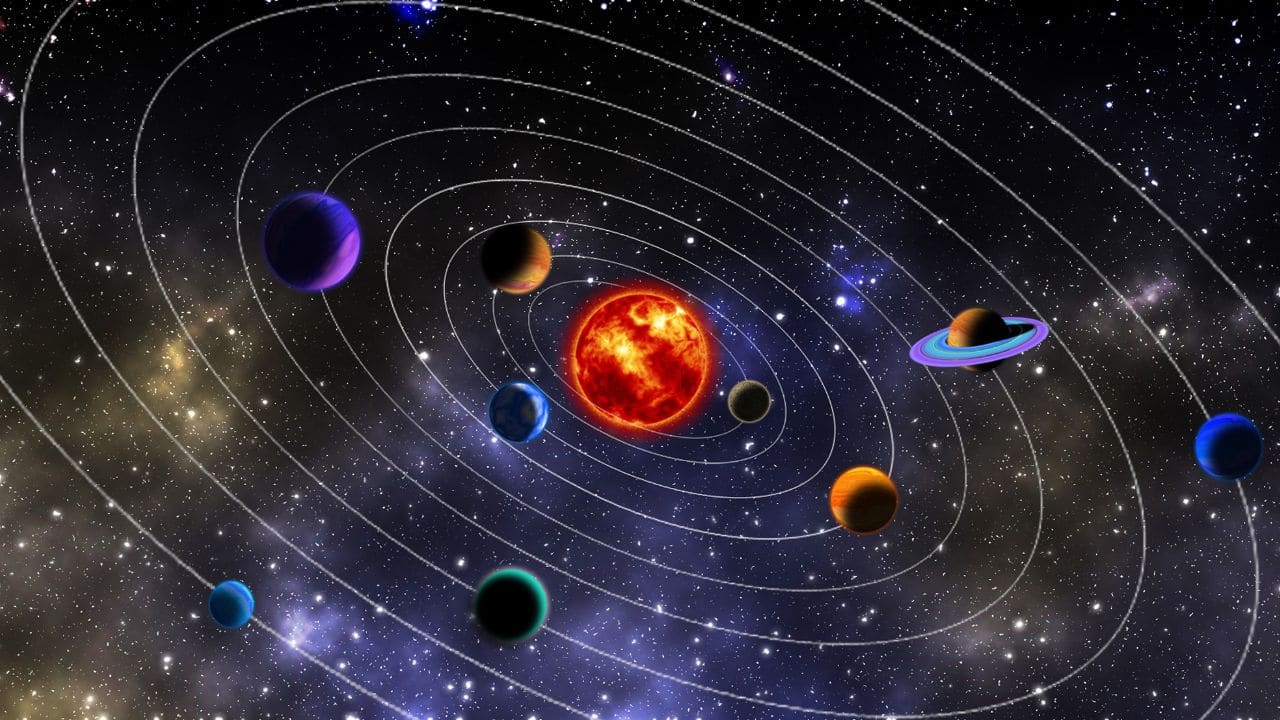
Despite all our achievements, humanity remains dangerously fragile. Every person, city, and civilization depends on the thin biosphere of a single planet orbiting a modest star. A catastrophic asteroid impact, a runaway climate crisis, or a global nuclear war could wipe out our species in a geological blink. Stephen Hawking once warned that remaining confined to Earth leaves humanity vulnerable to extinction, suggesting that colonizing space may be our only long-term insurance policy.
The history of life on Earth offers grim reminders. Over 99% of all species that ever lived are now extinct. The dinosaurs, once masters of the planet, were undone by a single cosmic rock. In comparison, our civilization — with its digital networks and nuclear arsenals — is both more capable and more precarious. We hold the power to terraform planets, yet we struggle to manage our own environment. The challenge of survival, once fought against nature, now turns inward: will humanity destroy itself before it reaches the stars?
The Technological Race Against Time
In the 21st century, our species faces a paradox. The same technologies that could save us also threaten to annihilate us. Artificial intelligence could revolutionize medicine and space travel — or destabilize economies and militaries. Genetic engineering could cure diseases — or unleash uncontrollable biohazards. Nuclear fusion could provide clean energy for centuries — or be overshadowed by geopolitical conflicts over scarce resources.
Our technological evolution has outpaced our moral and political maturity. The question is not whether we can build interstellar ships, but whether we can survive long enough to use them wisely. NASA’s Artemis program and SpaceX’s Starship are promising steps toward returning to the Moon and eventually reaching Mars, yet such projects require global cooperation and sustained investment. In a world fragmented by nationalism and economic inequality, this unity remains uncertain. The race to space may turn from a shared human endeavor into a competition for survival — or domination.
Mars: Humanity’s Next Frontier or Last Refuge?
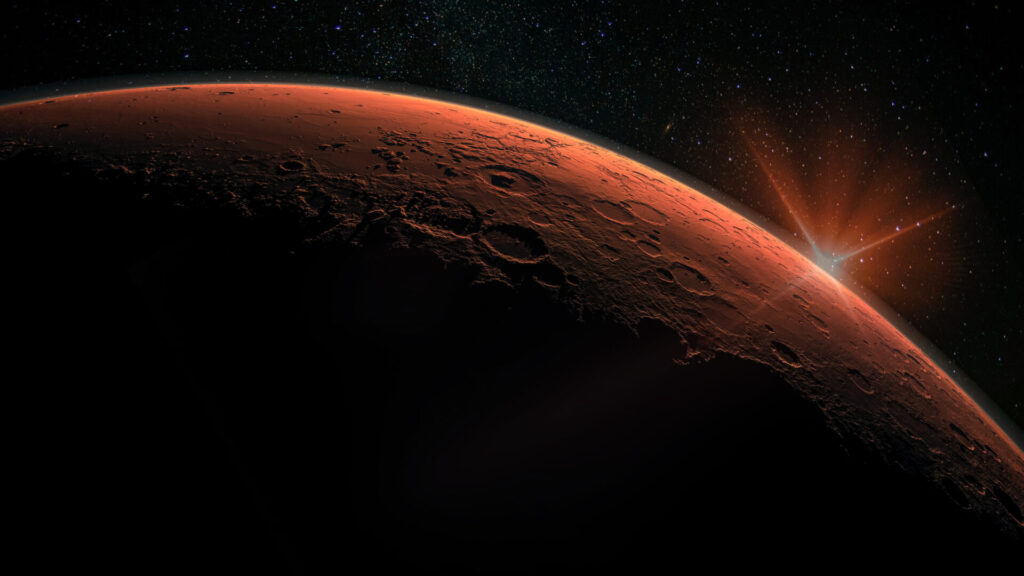
Mars has long captivated the human imagination. Its red deserts, polar ice caps, and thin atmosphere seem almost within reach, yet still alien enough to inspire awe. In recent decades, robotic missions have revealed evidence that Mars once had rivers and perhaps even microbial life. Elon Musk envisions a future where millions live on Mars in self-sustaining cities, ensuring the continuity of human civilization should disaster strike Earth.
But the challenges are staggering. Mars lacks a breathable atmosphere, a global magnetic field, and liquid water on its surface. Temperatures can drop below -100°C, and cosmic radiation bombards the planet constantly. Establishing a colony would require life-support systems that must operate flawlessly for years. Any failure — whether mechanical or biological — could be catastrophic.
Yet history shows that humans have an uncanny ability to adapt. Just as our ancestors crossed oceans and tundras, we may eventually transform Mars into a second home. Terraforming, though centuries away, could one day reshape the planet’s climate. With perseverance and innovation, Mars could become not just humanity’s backup, but a bold new chapter in our story.
Beyond Mars: The Call of the Stars
If Mars is the first step, the stars are the ultimate goal. The nearest star system, Alpha Centauri, lies over four light-years away — an unimaginable distance with current propulsion technology. Even our fastest spacecraft would take tens of thousands of years to reach it. To become truly interstellar, humanity must develop technologies that border on science fiction: fusion drives, antimatter propulsion, or even warp engines that bend spacetime itself.
Projects like Breakthrough Starshot have proposed launching tiny laser-propelled probes to neighboring stars, reaching 20% of the speed of light. Though these missions may not carry humans, they represent humanity’s first genuine attempt to reach beyond the solar system. In the long term, concepts like generation ships — vast vessels carrying self-sustaining communities — or suspended animation could make interstellar colonization feasible.
However, such ambitions also raise profound ethical questions. Should we spread human life across the galaxy if we cannot manage peace and sustainability on Earth? Will we bring enlightenment to the stars — or our same destructive tendencies? The cosmos may hold infinite potential, but it will not absolve us of our moral responsibilities.
The Great Filter: Are We Alone for a Reason?
One of the most haunting mysteries in science is the Fermi Paradox: if the universe is full of planets and life-sustaining conditions, where is everybody? The silence of the cosmos suggests that intelligent life may be rare — or short-lived. The concept of the “Great Filter” proposes that civilizations destroy themselves before they can expand beyond their home worlds. Nuclear war, ecological collapse, or runaway AI could be such filters.
If humanity can overcome its own self-destructive tendencies, it might be among the few species to pass this cosmic test. But if not, our extinction would simply become another data point in the universe’s vast experiment. Every failed civilization would leave behind silent ruins — echoes of potential never fulfilled. This realization adds urgency to our quest: survival is not just about exploration, but about transcendence.
Artificial Intelligence and the Post-Human Future
There is another possibility: perhaps the next stage of humanity’s expansion won’t involve humans at all — at least not in the biological sense. As artificial intelligence and robotics advance, we may create entities capable of surviving the vacuum of space far better than flesh and bone. These post-human explorers could represent an evolutionary leap, merging human consciousness with machines.
Such beings could travel for millennia without aging, powered by starlight and computation. They might seed distant worlds with the essence of human knowledge, even if our physical bodies perish. Yet this vision also raises existential dilemmas: if humanity’s legacy lives on through artificial minds, have we truly survived — or merely been replaced? The boundary between extinction and transformation may blur in ways we can scarcely imagine.
The Ethics of Expansion
Colonizing other worlds brings not only technical but moral challenges. If we discover microbial life on Mars or Europa, do we have the right to alter those environments for our own survival? Should we prioritize the preservation of alien ecosystems, or the continuity of human civilization? These questions force us to reconsider what it means to be stewards of life in the universe.
Some philosophers argue that expanding into space is our moral duty — a way to ensure that consciousness and life continue, regardless of Earth’s fate. Others caution that our first responsibility is to fix the problems we have created here before spreading elsewhere. If we export our conflicts, inequalities, and environmental neglect to other worlds, we risk repeating the same mistakes on a cosmic scale. Expansion without wisdom would only accelerate our countdown to extinction.
The Path Forward: A Shared Vision
For humanity to thrive among the stars, cooperation must replace competition. Space exploration cannot be the domain of a few nations or corporations; it must become a collective project for all humankind. The International Space Station stands as a symbol of what global collaboration can achieve, but far more ambitious alliances will be required.
Education, sustainable development, and equitable technology access are crucial. A society divided by poverty or misinformation cannot sustain the kind of unity and long-term vision space colonization demands. Our greatest challenge is not building rockets, but building trust — trust between nations, generations, and even between humans and the intelligent machines we create.
Conclusion: The Choice of a Species
The future of humanity hangs in a delicate balance between extinction and expansion. We possess the knowledge and tools to colonize the stars, yet also the capacity to destroy ourselves through arrogance and shortsightedness. Whether our story ends on a dying planet or unfolds across a thousand worlds depends on the choices we make now.
In the end, the stars will not wait for us. The universe is vast, ancient, and indifferent. But within its cold expanse, humanity has kindled a fragile spark of consciousness — a spark capable of reaching across the void. Our fate is not yet written. The countdown continues, but it need not end in silence. If we choose wisdom over recklessness, unity over division, and curiosity over fear, then the future will not mark our extinction — but our expansion into the infinite night.
About the Author
