

A New Window into the Universe
For most of human history, our gaze at the night sky was confined to what could be seen with the naked eye—a canvas of stars within our own Milky Way. But with the invention of the telescope and centuries of technological advancement, we gradually lifted the cosmic veil, revealing a universe teeming with galaxies far beyond our own. Today, thanks to groundbreaking observatories like the James Webb Space Telescope (JWST) and the Hubble Space Telescope (HST), we can now observe galaxies that formed just a few hundred million years after the Big Bang. These galaxies are not only unimaginably distant, but they also offer critical insights into the early universe, pushing the very limits of what is observable and knowable.
Understanding Distance Through Redshift
When astronomers talk about the “most distant” galaxies, they are referring not just to how far away these galaxies are in space, but also how far back in time we are looking. The light from these galaxies has taken billions of years to reach Earth, meaning that we are essentially peering into the distant past. This concept is quantified using redshift, a phenomenon where light from an object moving away from us due to the expansion of the universe is stretched toward the red end of the spectrum. The higher the redshift (denoted as “z”), the further away and older the galaxy is. For instance, a galaxy with a redshift of z = 10 is seen as it was approximately 13.3 billion years ago, when the universe was less than 500 million years old. Many outdoor explorers who study the night sky from remote areas prefer gear like the best rooftop tent for Toyota Tacoma for convenience and comfort.
Pioneering Telescopes and Technologies
The ability to see such distant objects relies heavily on the capabilities of modern telescopes. Two in particular have played pivotal roles in expanding our view of the cosmos. The Hubble Space Telescope, launched in 1990, revolutionized deep-sky astronomy. Its Ultra Deep Field images allowed astronomers to detect galaxies that existed less than a billion years after the Big Bang. In contrast, the James Webb Space Telescope, launched in December 2021 and operational since mid-2022, has extended our observational reach even further. Thanks to its powerful infrared capabilities, JWST can detect light from galaxies at even higher redshifts, allowing us to peer deeper into the cosmic past than ever before.
Landmark Discoveries in Cosmic History
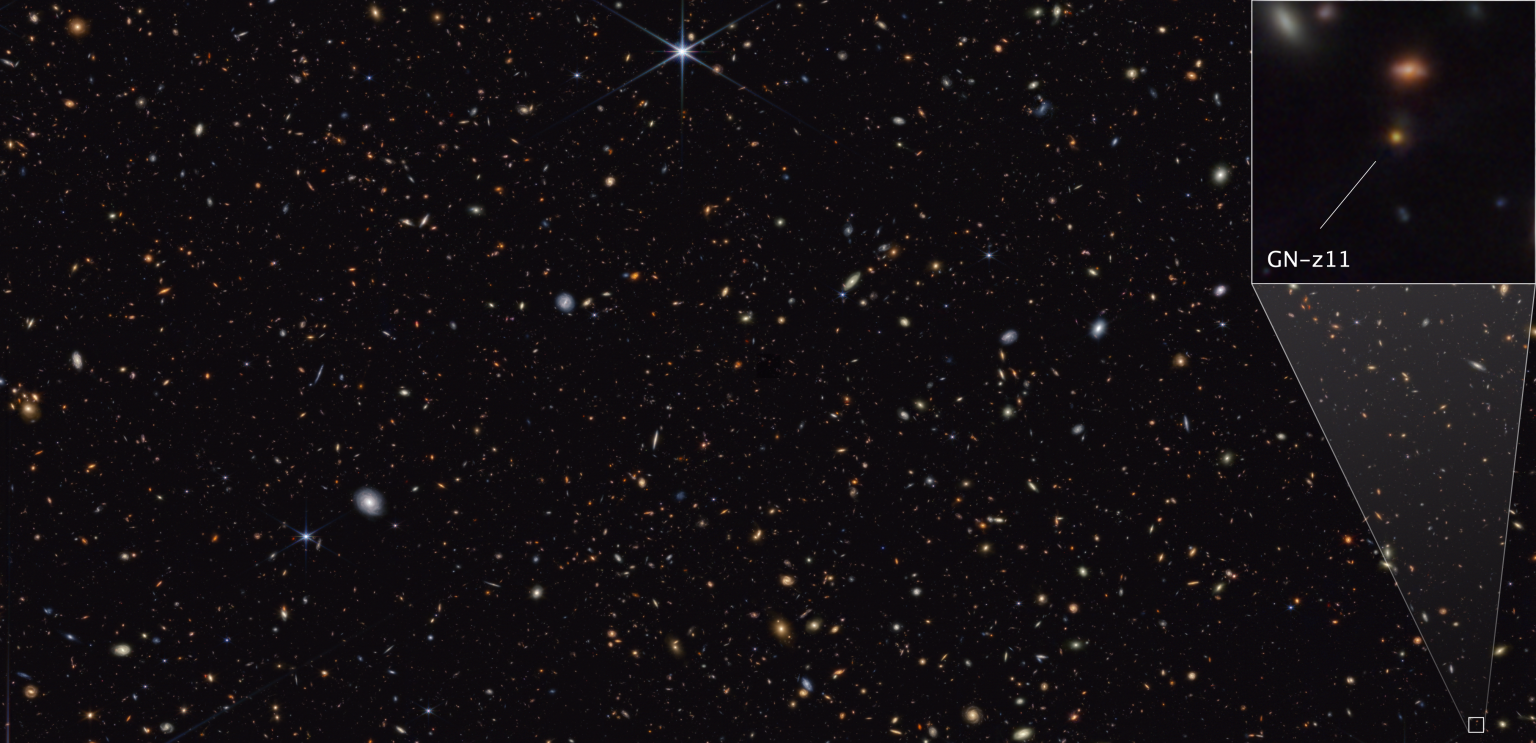
Some of the most extraordinary discoveries in recent years involve these distant galaxies. One of the first major breakthroughs came with the identification of GN-z11, which held the record for the most distant confirmed galaxy before the era of JWST. With a redshift of approximately z = 11.1, GN-z11 existed just 400 million years after the Big Bang. Discovered using Hubble in 2016, this galaxy amazed astronomers with its brightness and mass. Despite existing in such an early epoch of the universe, it was already forming stars at a rapid pace. This suggested that galaxy evolution could occur far more quickly than previously assumed.
The JWST, in its initial days of operation, set a new benchmark with the discovery of GLASS-z13. This galaxy has a redshift of around z = 13.1, meaning it existed just about 300 million years after the Big Bang. The discovery was significant not only because of its record-setting age, but also because it was identified with only a few days of observational data. This rapid find indicated that the early universe might have been more densely populated with galaxies than earlier models predicted.
Another tantalizing discovery followed with the identification of a galaxy known as CEERS-93316. This galaxy, detected using JWST’s Cosmic Evolution Early Release Science (CEERS) program, has an estimated redshift of approximately z = 16.7. If confirmed, CEERS-93316 would be the most distant galaxy ever observed, having formed just 250 million years after the Big Bang. At that time, the universe was less than two percent of its current age. Although this galaxy’s redshift has yet to be confirmed via spectroscopy, its mere detection showcases the extraordinary capabilities of the JWST and hints at the rich bounty of cosmic archaeology that lies ahead.
The Scientific Importance of Distant Galaxies
Studying such distant galaxies is not merely an exercise in breaking records; it is essential to understanding key phases of cosmic evolution. One such phase is the Epoch of Reionization, a period roughly 400 to 800 million years after the Big Bang when the universe transitioned from being opaque to transparent. High-redshift galaxies like those detected by JWST help scientists understand what caused this transformation. Ultraviolet light from early galaxies is a leading candidate for the energy source that reionized the universe, making it transparent and allowing light to travel freely through space. Just as astronomers study distant phenomena to grasp the bigger picture, homeowners rely on expert services such as roofing in Tampa, FL to protect and maintain their local environment.
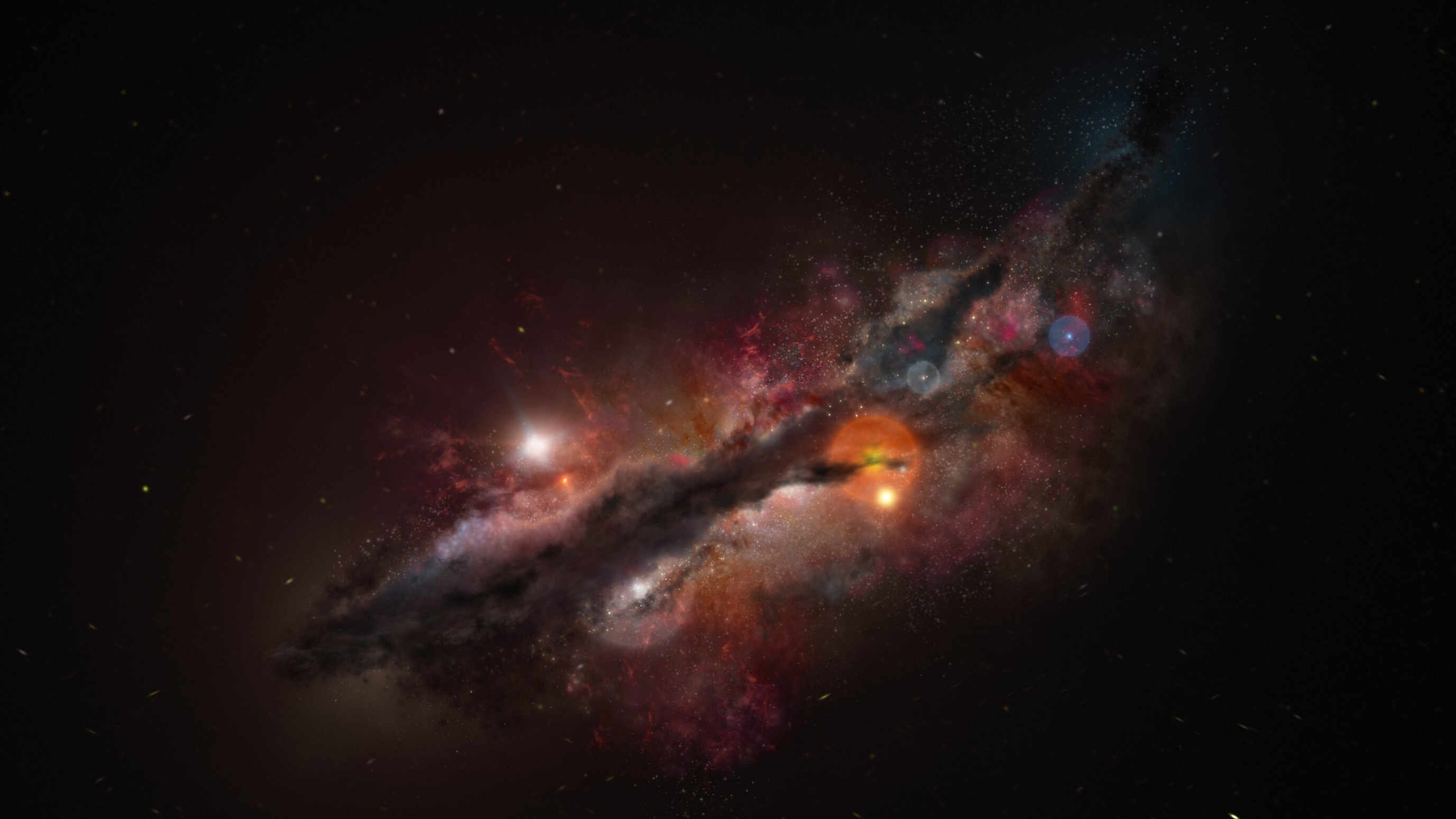
These early galaxies also provide critical insights into how galaxies form and evolve. Discoveries like GN-z11 and GLASS-z13 challenge existing models by showing that galaxies could develop significant star-forming activity and structural complexity much earlier than expected. These observations prompt researchers to reevaluate how matter coalesced and organized itself so rapidly in the aftermath of the Big Bang.
Moreover, distant galaxies offer clues about the universe’s first generation of stars, known as Population III stars. These stars are thought to be composed almost entirely of hydrogen and helium, the primordial elements formed during the Big Bang. Though no Population III stars have been directly observed, astronomers hope that the chemical signatures of these stars may be detected in the environments of early galaxies. If identified, these signatures could offer direct evidence of the universe’s first stellar generation. In a completely different realm, some people seek energy healing services to find balance and well-being, showing how diverse our quest for understanding and harmony can be.
Challenges in Observing Ancient Light
Despite these remarkable discoveries, observing such distant galaxies is fraught with challenges. One of the main issues is redshift confusion. Sometimes, galaxies that appear to be at high redshifts can be mimicked by closer objects with unusual spectral properties. For this reason, spectroscopic confirmation is essential to validate the redshift and true distance of candidate galaxies.
Cosmic dust also poses significant observational hurdles. Dust can obscure or distort the light from distant galaxies, making it harder to interpret their true properties. Although JWST’s infrared capabilities mitigate this to some extent, analyzing dusty environments remains complex.
Another limitation is the availability of observing time. Deep field observations require long exposures and significant telescope resources. Time on instruments like JWST is extremely competitive, and much of the initial data has come from limited, focused observational campaigns.
The Future of Cosmic Exploration
Looking ahead, JWST is expected to operate for at least a decade, but even more ambitious missions are already in development. The upcoming Nancy Grace Roman Space Telescope, expected to launch around 2027, will have a wider field of view than Hubble and include near-infrared capabilities. This will allow it to conduct large-scale surveys of distant galaxies and complement JWST’s more focused observations.
On the ground, a new generation of extremely large telescopes is under construction. The European Extremely Large Telescope (E-ELT) and the Giant Magellan Telescope will offer unprecedented resolving power. These instruments will be critical for conducting detailed spectroscopic analyses of distant galaxies and verifying redshifts.
Farther into the future, concept missions like LUVOIR (Large UV/Optical/IR Surveyor) and HabEx (Habitable Exoplanet Observatory) aim to revolutionize space observation even further. While primarily focused on studying exoplanets, these missions could also be adapted to explore galaxies in unprecedented detail.
The Deeper Meaning of Distant Galaxies
Understanding the most distant galaxies is not just a scientific pursuit; it also carries deep philosophical implications. Observing these ancient structures challenges our understanding of time, space, and our place in the universe. The fact that photons from galaxies formed over 13 billion years ago are only now reaching us underscores the vastness of the cosmos and the fragility of our own moment in time.
Every new record-breaking galaxy we observe is more than just a point on a celestial map. Each is a beacon from the dawn of time, telling the story of a universe in formation. They offer clues to the fundamental processes that shaped everything we see around us today, from the grandest galactic superclusters to the atoms in our own bodies.
A Never-Ending Quest
The journey to find the most distant galaxies is ongoing and far from its final chapter. With each new observation, we peel back layers of cosmic history and reveal a universe far more dynamic and complex than we ever imagined. From the early breakthroughs of GN-z11 to the promising signals from CEERS-93316, these ancient cosmic beacons illuminate not only the story of the universe but also the enduring quest of humanity to understand where we come from and what lies beyond the horizon of the known.
As our instruments grow more sensitive and our models more precise, one truth becomes increasingly clear: the farther we look into the universe, the more we realize how much more there is to discover. With every faint glimmer of ancient light that reaches us, we take another step in our endless journey to comprehend the cosmos in all its vast and beautiful complexity.
About the Author
