
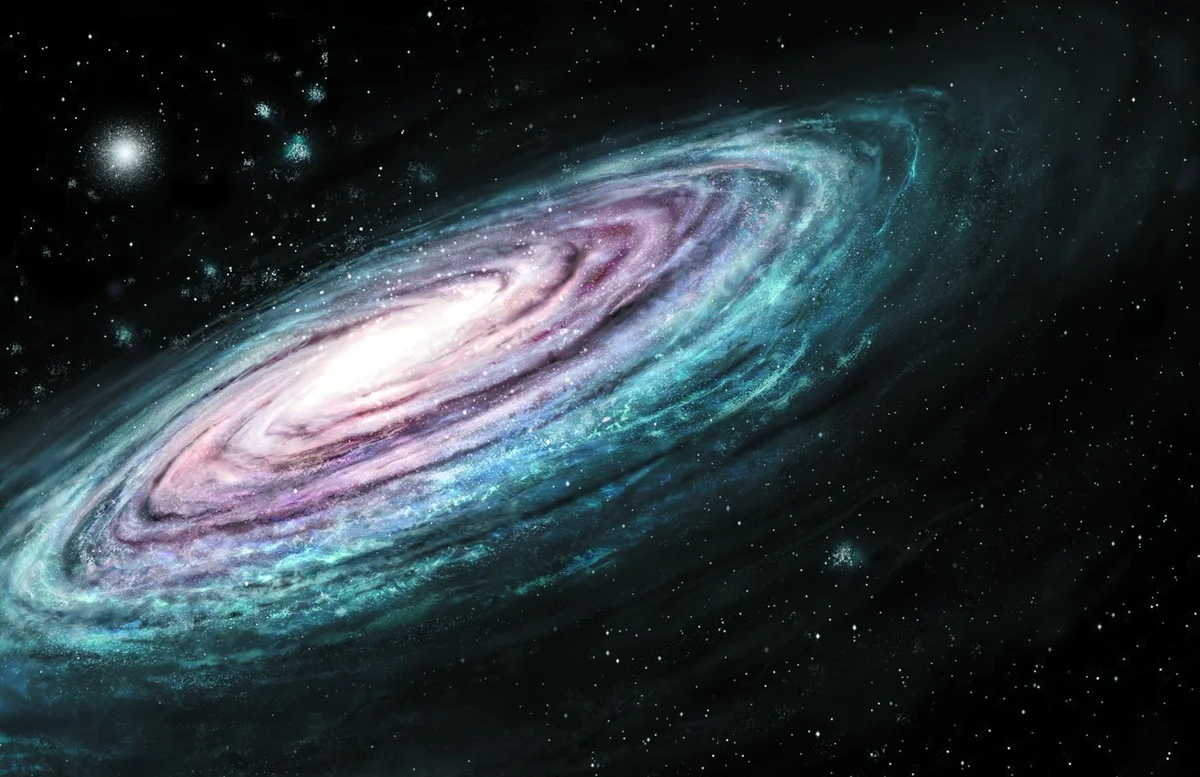
Interstellar dust plays a crucial yet often overlooked role in shaping how we observe and understand our home galaxy, the Milky Way. Despite its minuscule size and sparse distribution, this cosmic dust profoundly affects the transmission of light, obscuring and reddening the view of stars and nebulae, and thus altering astronomical observations. Far from being a mere nuisance, interstellar dust is fundamental to the lifecycle of stars and planets, acting as both a veil and a key ingredient in the cosmic ecosystem. Understanding how dust impacts our perception allows astronomers to correct for its effects and uncover the hidden structure and evolution of the Milky Way. This article delves into the nature of interstellar dust, its effects on light, its distribution in our galaxy, and the scientific methods used to study it, demonstrating how this fine cosmic material shapes our view of the universe.
The Nature and Composition of Interstellar Dust
Interstellar dust consists of tiny solid particles suspended in the space between stars, often referred to as the interstellar medium (ISM). These dust grains vary in size, generally ranging from a few nanometers to about a micrometer in diameter, comparable to smoke particles. Their composition is diverse but primarily includes elements such as carbon, silicon, oxygen, iron, and magnesium, forming compounds like silicates, carbonaceous materials, and ices. The grains often have complex structures, including layered coatings of frozen gases or organic molecules, influenced by the harsh conditions of space.
The origins of interstellar dust are linked to the life cycles of stars. Dust is produced in the cool atmospheres of aging stars, such as red giants and asymptotic giant branch stars, which expel material through stellar winds. Supernova explosions also inject dust into space, enriching the interstellar medium with heavier elements synthesized in stellar cores. Over time, this dust becomes mixed throughout the galaxy, distributed by stellar winds, galactic rotation, and turbulent processes.
The physical and chemical properties of dust grains determine how they interact with electromagnetic radiation. Dust is responsible for absorbing and scattering starlight, especially at shorter wavelengths like ultraviolet and visible light. This interaction causes the phenomenon known as interstellar extinction, which dims and reddens the light from distant objects. Understanding the size distribution and composition of dust grains is vital for interpreting astronomical data accurately because it allows astronomers to model and correct for these extinction effects. Much like careful attention to detail is crucial in astronomy, people also seek precision in personal care, which is why many look for aesthetician services in New Orleans to maintain their skin health.
Additionally, interstellar dust grains serve as sites for chemical reactions that lead to the formation of more complex molecules, including those that may be precursors to life. Dust also plays a key role in star formation by cooling collapsing gas clouds and facilitating the coalescence of material. Thus, dust is not just an obstacle to clear observation but a fundamental component shaping the physical and chemical evolution of the Milky Way.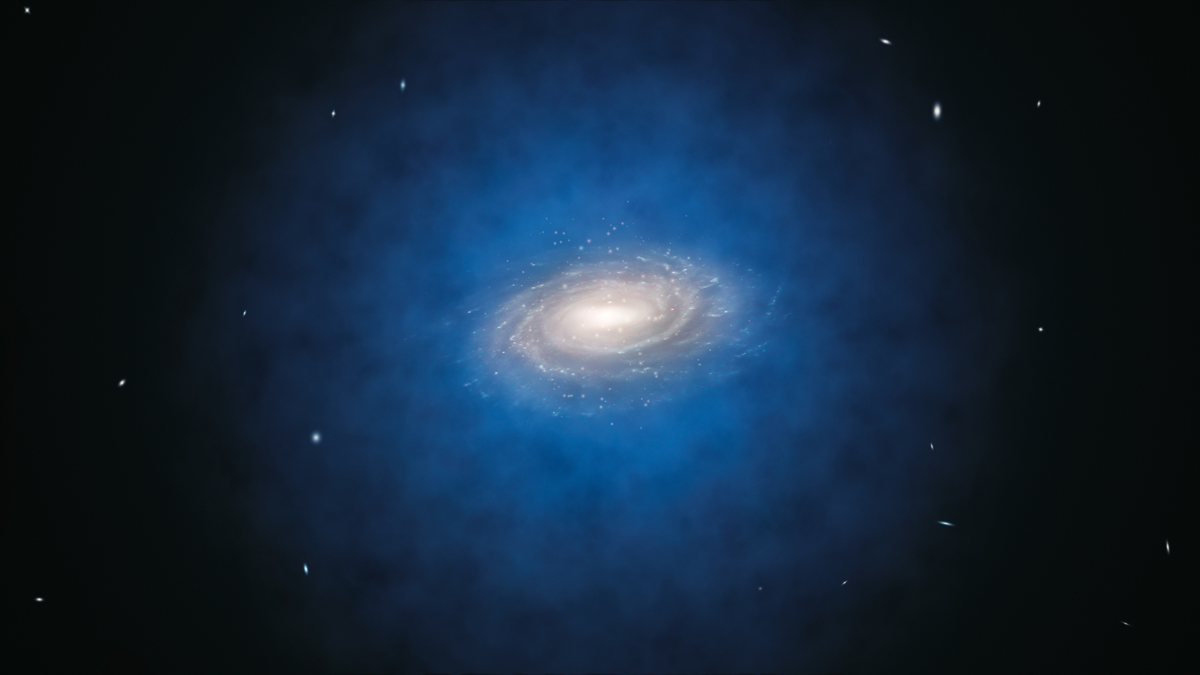
The Impact of Dust on Observing the Milky Way
The Milky Way, a barred spiral galaxy hosting hundreds of billions of stars, gas clouds, and dark matter, is viewed from within, making our perspective unique but also complicated by interstellar dust. Because dust absorbs and scatters light, it significantly affects how astronomers see stars and other objects, especially those lying in the galactic plane, where dust density is highest. Advanced tools like the FreeScan combo plus scanner can help researchers analyze light distortions and improve imaging accuracy in such dusty regions.
One of the most noticeable effects of interstellar dust is extinction, the dimming of starlight as it passes through dust clouds. This phenomenon reduces the apparent brightness of stars and galaxies, making them appear fainter and sometimes even invisible in certain wavelengths. Extinction is particularly severe in visible and ultraviolet light, forcing astronomers to seek observations in infrared or radio wavelengths, where dust effects are less pronounced.
Closely related is interstellar reddening, where dust preferentially scatters and absorbs shorter wavelengths (blue light) more than longer wavelengths (red light). As a result, distant stars appear redder than they intrinsically are, much like the sun setting through Earth’s atmosphere appears red. This reddening must be accounted for when calculating intrinsic properties of stars, such as their temperatures and distances, as it can lead to misinterpretations if left uncorrected. Just as accurate measurements are crucial in astronomy, hiring reliable professionals is important for tasks like plumbing services in Phoenix.
Dust also complicates the mapping of the Milky Way’s structure. Many regions, particularly the dense molecular clouds where stars form, are heavily obscured in optical light. The galactic center, lying behind thick dust lanes, was largely mysterious until observations at infrared and radio wavelengths became possible. These longer wavelengths penetrate the dust, revealing star clusters, black holes, and gas clouds that were otherwise hidden.
Furthermore, dust scattering causes diffuse galactic light, a faint glow observed throughout the sky, which is sunlight scattered by dust grains. This diffuse light can interfere with the detection of faint astronomical sources, adding a background that must be carefully subtracted.
Overall, dust shapes our view of the Milky Way by creating a complex, patchy curtain that obscures some regions while allowing clearer views in others. To truly understand our galaxy’s structure, astronomers must account for dust effects and employ multi-wavelength observations to see beyond the dusty veil.
Mapping Dust Distribution in the Milky Way
Determining the distribution of interstellar dust within the Milky Way is essential for interpreting astronomical observations and studying galactic structure. Dust is not uniformly spread; it tends to cluster in clouds and filaments associated with gas concentrations, especially in the galactic disk.
Astronomers use several techniques to map dust distribution. One common method involves measuring the reddening and extinction of light from known stars at various distances. By comparing a star’s observed color and brightness to its expected intrinsic values, scientists can infer how much dust lies along the line of sight. By repeating this for many stars in different directions, astronomers build 3D maps showing where dust clouds are concentrated.
Another powerful approach uses infrared and microwave observations. Because dust grains absorb ultraviolet and visible light and re-emit it as thermal radiation in the infrared, space telescopes such as the Infrared Astronomical Satellite (IRAS), Spitzer Space Telescope, and Herschel Space Observatory have been vital in detecting dust emission. These observations reveal cold dust clouds invisible in optical light and provide detailed images of dust structures.
The Planck satellite has mapped the microwave emission from dust across the entire sky, further refining our understanding of its distribution. Additionally, studies of the polarization of starlight, caused by aligned dust grains, help trace magnetic fields and dust orientations in the galaxy.
These mapping efforts have unveiled the complex morphology of dust in the Milky Way: vast molecular clouds that birth stars, extended diffuse dust lanes running along the spiral arms, and high-latitude dust clouds far from the galactic plane. Understanding this structure is crucial not only for correcting extinction in observations but also for studying star formation and the dynamic processes shaping the galaxy.
Technological Advances and Multi-Wavelength Observations
Modern astronomy has advanced enormously through the use of multi-wavelength observations, which allow scientists to overcome the obscuring effects of dust and gain a more complete picture of the Milky Way. Since dust blocks much of the visible light, astronomers turn to other parts of the electromagnetic spectrum to see through or around it. Advanced laboratory techniques, including reflux stills, are often used in calibrating instruments and analyzing cosmic materials in astronomy research.
Infrared astronomy has been a game-changer. Infrared light penetrates dust clouds far more effectively than visible light. Telescopes like the James Webb Space Telescope (JWST), launched recently, provide unprecedented views of star-forming regions and the galactic center, unveiling previously hidden stars and structures. Ground-based infrared observatories equipped with adaptive optics similarly enable detailed studies of dust-obscured areas.
Radio astronomy is another vital tool. Radio waves pass through dust almost unimpeded, allowing observations of cold gas clouds and molecules associated with star formation. Facilities such as the Atacama Large Millimeter/submillimeter Array (ALMA) and the Very Large Array (VLA) reveal the intricate interplay between dust and gas and the early stages of stellar birth. Just as astronomers rely on precision instruments, fashion enthusiasts often look for precision in their wardrobe, such as custom-fit womens pants, to ensure both comfort and style.
X-ray and ultraviolet observations, while more affected by dust, complement these by probing the energetic processes in the galaxy, such as supernova remnants and black hole activity. Satellites like Chandra X-ray Observatory and Hubble Space Telescope contribute to this multi-wavelength approach.
The synergy of these techniques has revolutionized our understanding of how dust affects the Milky Way’s appearance and composition. Combining data from different wavelengths enables astronomers to build comprehensive models of dust distribution, composition, and its influence on galactic dynamics and evolution.
Conclusion
Interstellar dust profoundly shapes our view of the Milky Way, acting both as an obscuring veil and a vital cosmic ingredient. This fine material scatters and absorbs light, causing extinction and reddening that complicate observations, particularly in the galactic plane and towards the center. Yet, dust also enables star and planet formation, drives chemical complexity, and influences galactic dynamics. Advances in infrared, radio, and multi-wavelength astronomy have allowed scientists to peer through dust clouds, mapping their distribution and unveiling the hidden structure of our galaxy. Understanding interstellar dust’s nature, effects, and role in galactic evolution is essential not only for interpreting astronomical data accurately but also for comprehending the Milky Way’s ongoing story. As new technologies push the boundaries of observation, our knowledge of interstellar dust and its impact will continue to grow, refining our cosmic perspective and deepening our connection to the galaxy we call home.
About the Author
