
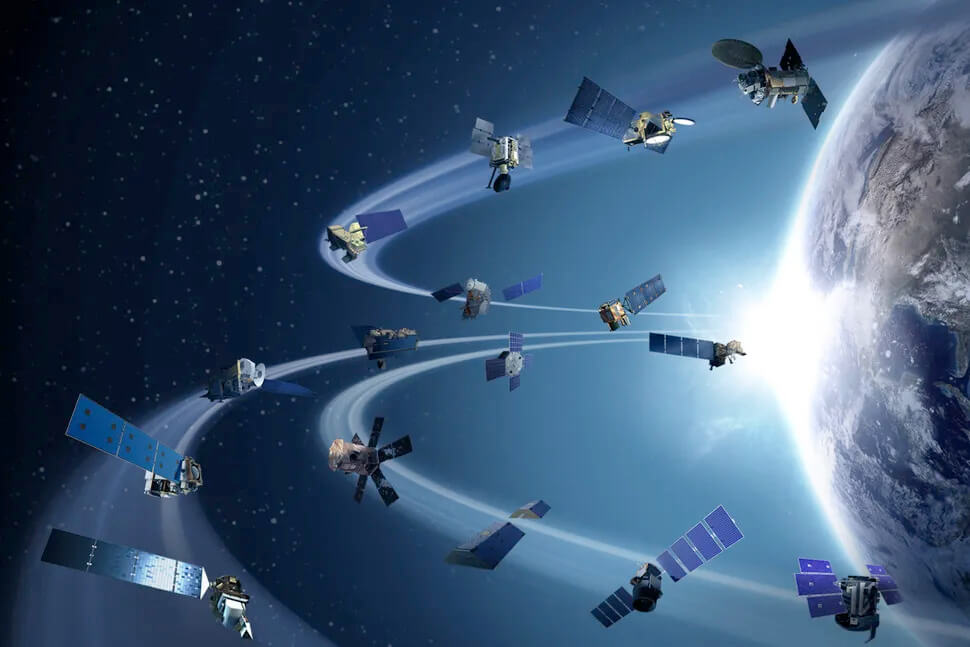
Since the dawn of human curiosity about the cosmos, the sky has been a canvas of wonder, mystery, and infinite possibility. For centuries, people have gazed upward, tracking the movements of celestial bodies, imagining life beyond Earth, and dreaming of visiting other worlds. Yet, it wasn’t until the mid-20th century that humanity truly began to reach out beyond our atmosphere, not with giant spacecraft full of humans, but with tiny mechanical eyes in the sky—satellites. These artificial observers have fundamentally transformed our understanding of the universe, enabling discoveries that were once inconceivable.
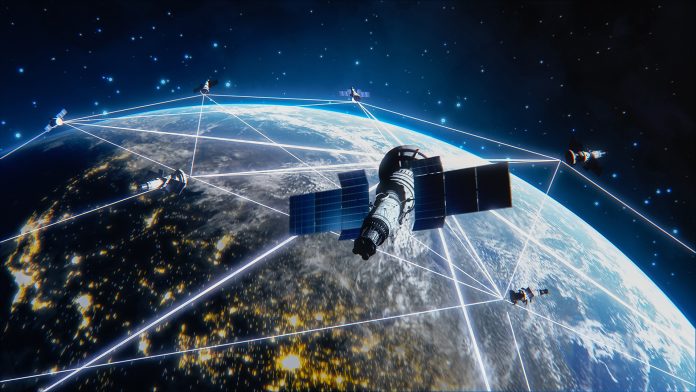
The Dawn of Satellite Technology
The history of satellites is both fascinating and a testament to human ingenuity. The world’s first artificial satellite, Sputnik 1, launched by the Soviet Union on October 4, 1957, marked the beginning of the space age. This small, spherical object, weighing just 183 pounds, sent simple radio signals back to Earth, yet it ignited a global revolution in science and technology. Suddenly, the idea of placing objects into orbit became tangible, and nations recognized the strategic, scientific, and cultural importance of satellite technology.
Sputnik’s success inspired a wave of innovation. Within months, the United States launched Explorer 1, which carried instruments to detect cosmic rays, uncovering the existence of the Van Allen radiation belts surrounding Earth. These early satellites were simple in design but monumental in purpose: they transformed theoretical aspirations into real-world achievements, proving that humans could now extend their reach into space. These initial launches also highlighted the geopolitical stakes of the space race, where satellite development was not just scientific but deeply tied to national pride and security.
Advancements in Communication and Observation
Following the initial successes, satellites began to evolve rapidly. The 1960s saw the development of communication satellites, enabling instantaneous global transmission of voice, television, and data. Telstar 1, launched in 1962, was the first active communications satellite to relay television signals across the Atlantic. The ability to send live broadcasts from one continent to another seemed almost magical at the time, shrinking the world and laying the groundwork for the interconnected planet we know today.
Parallel to communication, observation satellites began to emerge. The launch of Landsat 1 in 1972 revolutionized Earth observation, providing detailed imagery of land, water, and ice. These satellites offered unprecedented insight into environmental changes, urban growth, and natural disasters. The marriage of imaging technology and orbiting platforms allowed scientists to monitor Earth as never before, transforming satellite technology into a tool not just for space exploration, but for understanding our own planet. Over time, Earth observation satellites have become increasingly sophisticated, with multispectral and hyperspectral imaging capabilities that reveal details invisible to the naked eye, from deforestation patterns to crop health and ocean temperature changes.
Expanding the Horizons of Space Exploration
While early satellites focused primarily on communication and observation, soon their ambitions expanded far beyond Earth orbit. The 1960s and 1970s marked an era of interplanetary exploration through satellite technology. NASA’s Mariner program, for instance, sent a series of robotic spacecraft to Venus, Mars, and Mercury, transmitting invaluable data back to Earth. These satellites revealed details of planetary atmospheres, surface conditions, and magnetic fields, building the foundation for our current understanding of the solar system. Mariner 4, for example, became the first spacecraft to send back close-up images of Mars, unveiling a cratered landscape that reshaped expectations about the planet’s history.
Satellites also became vital for studying phenomena invisible to the naked eye. Observatories like the Hubble Space Telescope, launched in 1990, opened up the universe in unprecedented detail, capturing stunning images of distant galaxies, nebulae, and supernovae. Unlike ground-based telescopes limited by Earth’s atmosphere, satellites could observe cosmic events with clarity, allowing astronomers to explore the origins and evolution of the universe. Hubble’s observations have answered questions about the age of the universe, the formation of galaxies, and the behavior of black holes, making satellites essential instruments for modern astrophysics.
The Role of Satellites in Scientific Discovery
Satellites have not only enabled observation but have transformed scientific methodology. Before satellites, data collection from remote locations, deep oceans, or the upper atmosphere was slow and sporadic. Satellites now allow continuous, real-time monitoring. Climate scientists rely on data from Earth-observing satellites to track global warming, polar ice melt, and deforestation. Meteorologists use satellite imagery to predict storms, hurricanes, and other natural disasters, often saving countless lives.
Moreover, satellites play a crucial role in space-based experiments. Instruments on satellites measure cosmic radiation, gravitational waves, and magnetic fields. They provide critical data on solar winds and the interactions between the sun and Earth’s magnetosphere. Satellites also monitor the space environment itself, detecting meteoroids and space debris that could threaten spacecraft or satellites. These insights not only deepen our understanding of the cosmos but also help safeguard life on our planet by improving space weather forecasting.
Miniaturization and the Age of Smarter Satellites
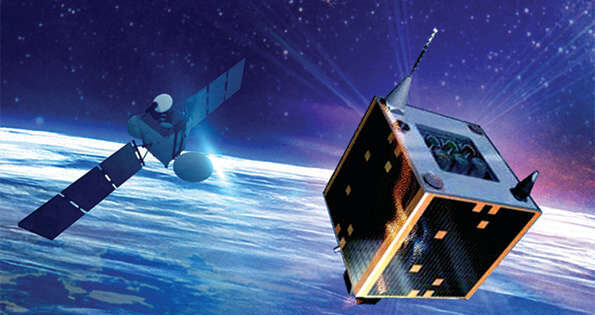
As satellite technology matured, engineers began to shrink these mechanical marvels while increasing their capabilities. The modern era has seen the rise of CubeSats and nanosatellites, tiny yet highly capable platforms that can perform specialized missions. Universities, private companies, and even individual researchers now have the ability to launch satellites into orbit, democratizing access to space exploration.
These smaller satellites, often launched in swarms, complement traditional, large-scale satellites. They monitor environmental changes, track satellites and debris in orbit, and even test new technologies in space. The concept of satellite constellations, such as those deployed for global internet coverage, is revolutionizing communication and data accessibility. This miniaturization has accelerated innovation and made space exploration more versatile, cost-effective, and collaborative. The rise of private space companies investing in satellite technology has also transformed the industry, creating a competitive yet innovative ecosystem that pushes the boundaries of what satellites can achieve.
Satellites and Planetary Science
Satellites are indispensable for studying other planets. Robotic probes orbiting Mars, like Mars Reconnaissance Orbiter, provide detailed images of the planet’s surface, revealing ancient riverbeds, ice deposits, and potential signs of past life. The Galileo mission to Jupiter and its moons uncovered the existence of a subsurface ocean on Europa, sparking discussions about habitability beyond Earth. The ability to place satellites around distant worlds allows scientists to conduct long-term studies, measure atmospheric composition, track seasonal changes, and plan for future human exploration missions. Such technological advancements also influence logistical planning for future missions, much like how complex case evaluations require structured coordination similar to that seen in a Florida personal injury law firm.
Even satellites orbiting Earth contribute indirectly to planetary science. Observing Earth as a planetary system helps scientists develop models that can be applied to other worlds, understanding climate, geology, and atmospheric dynamics on a broader scale. By studying the changes and processes of our home planet, satellites provide a reference point for interpreting observations of exoplanets and other celestial bodies.
Cultural and Global Impact of Satellites
Beyond science and technology, satellites have reshaped how humanity perceives itself. Images of Earth from space, first captured by satellites like Apollo’s Lunar Orbiter missions, have inspired a sense of shared destiny and interconnectedness. These iconic images remind us that Earth is a fragile, singular home floating in a vast cosmos. Satellites, in their silent orbits, have become ambassadors of human curiosity, connecting cultures and nations through shared discoveries. This broadened global perspective also encourages people to plan responsibly for the future, prompting many to consider long-term financial safeguards that offer stability and peace of mind, such as final expense insurance.
They have also driven geopolitical competition and collaboration. The Cold War’s space race, initiated by the launch of Sputnik, was a catalyst for technological advancement, but later decades have seen unprecedented international cooperation in satellite projects. Agencies from different countries now collaborate on climate monitoring, planetary research, and global communications, demonstrating that the reach of satellites extends beyond space into diplomacy and global unity.
The commercial and social impact of satellites is also profound. Modern satellite imagery supports agriculture, disaster relief, urban planning, and environmental protection. Satellite-based navigation systems, such as GPS and Galileo, underpin daily life, from travel to emergency services, illustrating how these orbiting tools are now indispensable to human society. These advancements in navigation and accessibility make coordinated travel more efficient and reliable, highlighting the convenience and professionalism offered by services like a Denver limo service.
The Future of Satellite Exploration
Looking forward, satellites will continue to revolutionize space exploration in ways we can only begin to imagine. With missions aimed at studying asteroids, mapping exoplanets, and supporting human exploration of the Moon and Mars, satellites remain essential to our cosmic ambitions. Projects like the James Webb Space Telescope, although technically more than a satellite, embody the evolution of orbiting science platforms, pushing the boundaries of human knowledge further than ever before.
Moreover, satellites are now integral to the infrastructure of space travel itself. GPS navigation, satellite internet, and orbital monitoring systems are critical for both robotic and human missions. They ensure spacecraft can navigate accurately, communicate reliably, and avoid hazards in an increasingly crowded space environment. The precision and reliability required in satellite operations are mirrored in services that prioritize thoroughness and dependability, such as a professional commercial cleaning company Geneva.
Conclusion
From the simple beeps of Sputnik to the sophisticated instruments of modern satellites, these eyes in the sky have profoundly reshaped our relationship with the cosmos. They have turned science fiction into reality, transformed Earth observation, and enabled humanity to explore planets, stars, and galaxies far beyond our home. The history of satellites is a story of ingenuity, ambition, and relentless curiosity—a testament to humanity’s desire to see, understand, and connect with the universe.
As we look to the future, satellites will continue to evolve, guiding us toward new frontiers, revealing the unknown, and reminding us that in the vastness of space, even the smallest human-made object can open a window to infinite discovery. The pursuit of exploring uncharted possibilities in space mirrors how cutting-edge medical facilities push boundaries in healing and innovation, exemplified by a Phoenix stem cell treatment center.
About the Author
